Redirecting you to our exclusive offer…

If you are not redirected automatically, click here.

Thanks for visiting! Your offer will open shortly.

This is default featured slide 1 title

Go to Blogger edit html and find these sentences.Now replace these sentences with your own descriptions.

This is default featured slide 2 title

Go to Blogger edit html and find these sentences.Now replace these sentences with your own descriptions.

This is default featured slide 3 title

Go to Blogger edit html and find these sentences.Now replace these sentences with your own descriptions.

This is default featured slide 4 title

Go to Blogger edit html and find these sentences.Now replace these sentences with your own descriptions.

This is default featured slide 5 title

Go to Blogger edit html and find these sentences.Now replace these sentences with your own descriptions.

Monday, October 24, 2022

Army specialist goes viral for speaking out in wake of soldier’s mysterious death

An army specialist’s video where she speaks out about assault within the army has gone viral, piquing the attention of multitudes of users worldwide. In the TikTok, the army specialist stationed in Germany expresses her fear for her life as her superiors ignored the abuse against her and her fellow soldiers. Read along to know more.

Army Sgt. Says She's Afraid for Her Life for Speaking Out

Source: daily dot

The What and Why

The aforementioned video was posted on the 6th of October and the woman claims that she is Spc. Thomas, in the 21st Theater Sustainment Command, stationed in Germany. In the video which went viral, Thomas clearly states that she is terrified as she thinks the army is trying to kill her and that if she is found dead, it is not suicide. What adds to the fear and anxiety is the mysterious death of another soldier, Denisha Montgomery. If what Thomas says is true, the truth about Mongomery’s death was distorted to present the army in a positive light and to hide the truth about abuse. Thomas added that she has been sharing her worries with her family, just like Montgomery did before she died.

Denisha Montgomery was found dead in the month of August, and her death was ruled out as a suicide. As of now, her family is disputing the cause of her death. According to the statements from the Montgomery family, she had been in touch with them before her death, and she had told them about an assault by another officer. She even showed them the bruises on her body. Although the army stuck to the suicide narrative, Montgomery’s family is determined to collect all the necessary evidence to bring out the truth behind the mysterious death.

In the TikTok video, Thomas also mentioned that she couldn’t even sleep at night due to the anxiety that someone will come in and assault her. The key to her room has been missing, according to what she stated in the video. She added that the primary reason for her speaking out now was an assault she witnessed a week before and the way it was handled. Her video garnered over 7 million views. She has also made two update videos after the first one to let people know that she is OK. Thomas also expressed her disappointment at the fact that it took a TikTok video for those in charge to do their jobs.

The post Army specialist goes viral for speaking out in wake of soldier’s mysterious death appeared first on TechStory.

Wendy’s employee mocks customers who request ‘no salt on fries’ on $50 order

TikTok has grown to become the most ideal platform where people from different walks of life make interesting revelations. From influencers to fast-food employees, the spectrum is quite varied. For a while now, fast-food employees have been expressing their feelings on TikTok about the illusory healthy modifications to their otherwise unhealthy orders. This feat of sprinkling a pinch of health to sate the guilt of unhealthy choices has now become a major source of humor for the fast-food employees who are leaving no stone unturned in pointing out the futility of these ‘healthy’ modifications. Read along to know more.

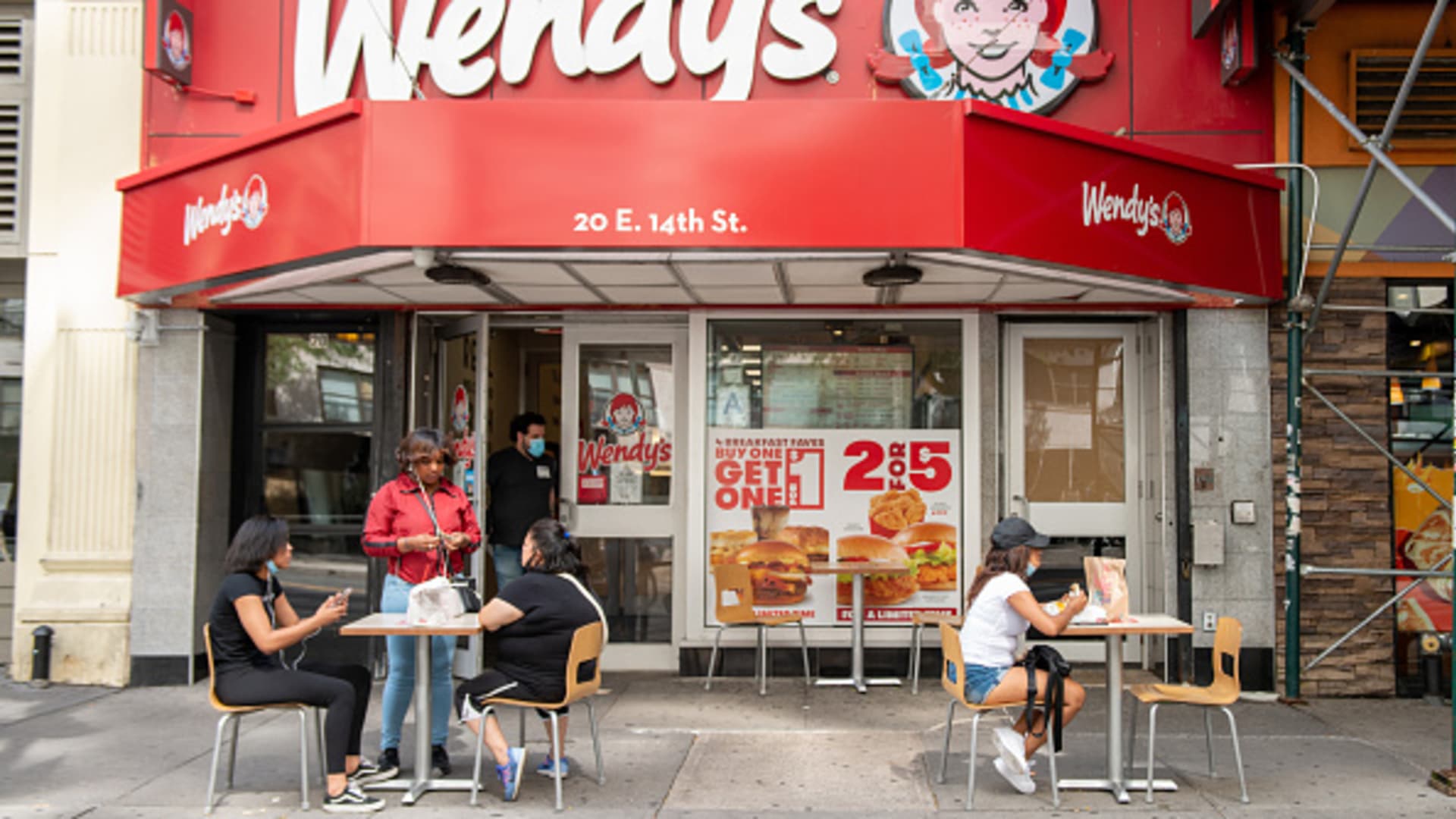
Wendy's

A Pinch Of Health

The starting point of this trend was a video posted on TikTok by a user named Will (@whyareyouherebozo). He recorded the video while he was working at Wendy’s. The text overlay on his video reads, “How customers feel saying ‘no salt on the fries’ after placing a $50 Wendy’s order.” The video was uploaded back in August and it has garnered over 320,000 views. He guffaws while sharing his take about these ‘healthy’ tweaks, “Like girl, don’t even worry about that Diet Coke.”

It is not hard to figure out that Will’s video is basically calling out those customers and their last-minute modifications to orders to add an illusion of health to an otherwise unhealthy order. The basic and simple question Will puts forth through this video is whether these changes are actually helpful.

Several commenters were in agreement about the fact that these changes were completely unnecessary and futile.

“It baffles me how much people spend at these awful food places,” a comment says.

“At Chick-fil-A, people always order frosted lemonade with diet lemonade that cancels out like 70 percent of the cup that has ice cream in it,” wrote another.

Will’s advice on this is simple, “I am saying. Like at this point, take the diabetes and enjoy life.” As simple as that.

While most users were convinced about the futility of the diet tweaks, some wondered if the ‘no salt on fries’ instruction was actually diet related. Some commenters were of the opinion that they ask for no salt on fries in order to ensure that they get fresh fries, and this has nothing to do with diet or health. However, Will happily assures them by saying that adding or not adding salt to the fries does not make any significant difference to the fries. Employees preparing fresh fries for every individual order is neither practical nor practiced.

The post Wendy’s employee mocks customers who request ‘no salt on fries’ on $50 order appeared first on TechStory.


Hong Kong officials announce Q1 2023 crypto bill to address rapidly expanding market

Soon after Hong Kong’s controllers declared the chance of permitting retail financial backers to take part straightforwardly in putting resources into digital forms of money, the region’s administration is currently purportedly dealing with a crypto charge that would set clear strategies to help the market’s extension.


Without a doubt, the bill relating to the cryptographic money guideline is supposed to be passed in the Regulative Gathering in the principal quarter of 2023, as per Liang Hanjing, overseer of monetary innovation at InvestHK – the regional’s administration division for unfamiliar direct speculations, as Baidu provided details regarding October 22.


His declaration shows up soon after Hong Kong’s money secretary Chen Maobo and depository division secretary Xu Zhengyu had informed the general population about the normal arrival of clear approaches on crypto resources during the Hong Kong Fintech Week that will open on October 31.


As per Lian Hanjing, the public authority expects to “lay out a permitting framework for virtual resource specialist organizations (VASPs),” taking into account that there are now such stages working in Hong Kong and that such exchanges convey tax evasion chances. As he further made sense of:


“Any individual working a business giving virtual resource administrations in Hong Kong, or effectively elevating virtual resource administrations to the Hong Kong public, should submit to The Hong Kong Protections and Prospects Commission [that it] has applied for and gotten a VASP permit ahead of time, and [that it] maintains the significant enemy of tax evasion and hostile to fear based oppressor funding regulations and guidelines.”


Liang Hanjing expects that the bill containing this change will be passed in the city’s Administrative Chamber in the main quarter of 2023. By then, he accepts that more VASPs will apply for licenses from controllers, and that cryptographic money exchanging Hong Kong would “thrive.”


As Finbold prior announced, the public authority of Hong Kong is thinking about allowing retail financial backers to partake straightforwardly in putting resources into computerized resources. With this thought, it expects a different position from that of central area China in the midst of the fintech departure that is giving Singapore an edge as the crypto business center point.


Presently it appears to a be that the area’s specialists are facilitating their position on the business, months subsequent to reporting that the impending Enemy of Tax evasion and Counter-Psychological oppressor Supporting Bill would incorporate a change presenting weighty financial and jail fines for unlicensed crypto organizations and their promoting.


The post Hong Kong officials announce Q1 2023 crypto bill to address rapidly expanding market appeared first on TechStory.


Binance is ‘narrowing down’ identity of hacker behind $570 million crypto attack, CEO says

Cryptographic money trade Binance is drawing nearer to sorting out the personality of a programmer that coordinated a $570 million hack on its BNB blockchain, Chief Changpeng Zhao told CNBC Monday.


Subsequent to getting a few hints from policing who the programmer may be, Binance is presently “reducing” the individual or people behind the assault, Zhao said in a meeting on CNBC’s “Cackle Box Europe.”


The assault being referred to saw a supposed cross-chain span focused on, permitting an at this point obscure programmer or programmers to pull out 2 million of Binance’s BNB tokens worth around $570 million at that point.


More than $1 billion has been lost to breaks on cross-chain spans up until this point this year, apparatuses that work with the quick exchange of tokens starting with one blockchain stage then onto the next, as per Chainalysis information.


Famous in the realm of “DeFi,” or decentralized finance, spans have turned into a hot objective for crooks because of flaws in their basic code.


“We’re still really pursuing … helping [authorities] to pursue the awful players, working with policing the globe,” Zhao said. “Working with policing one of the manners in which that we can attempt to make the space safe.”


“As a matter of fact, in this specific moment, policing us a few hints of who they figure it very well may be. So we’re really reducing.”


Binance mediated to restrict the harm of the assault, stopping movement on its BNB Chain blockchain network subsequent to planning with network validators — people and elements that approve exchange endorsements — to institute an update.


Zhao, who is usually alluded to as “CZ” on the web, said this implied BNB Chain had the option to forestall the greater part of the designated assets from being taken by the programmer.


“The blockchain had the option to freeze around 80% to 90% of it, so its genuine loss was a lot more modest,” he said.


“By far most of the assets stay taken care of,” Binance’s BNB Chain said in an explanation at the hour of the hack. About $100 million was unrecoverable, BNB Chain added.


The BNB Chain, initially known as Binance Chain, was first evolved by Binance in 2019. Like other blockchains, it includes a local token, called BNB, that can be exchanged or utilized in games and different applications.

The post Binance is ‘narrowing down’ identity of hacker behind $570 million crypto attack, CEO says appeared first on TechStory.


Toyota considering a reboot of its EV strategy to compete with Tesla

Toyota is reportedly considering a reboot of its electric vehicle strategy to compete better in the market. Last year the Japanese automaker announced that it is re-writing the $38 billion EV rollout plan to better compete with Tesla. Now, it is known that the automaker has halted some of its existing EV projects as the automaker has been slower to enter the booming market.

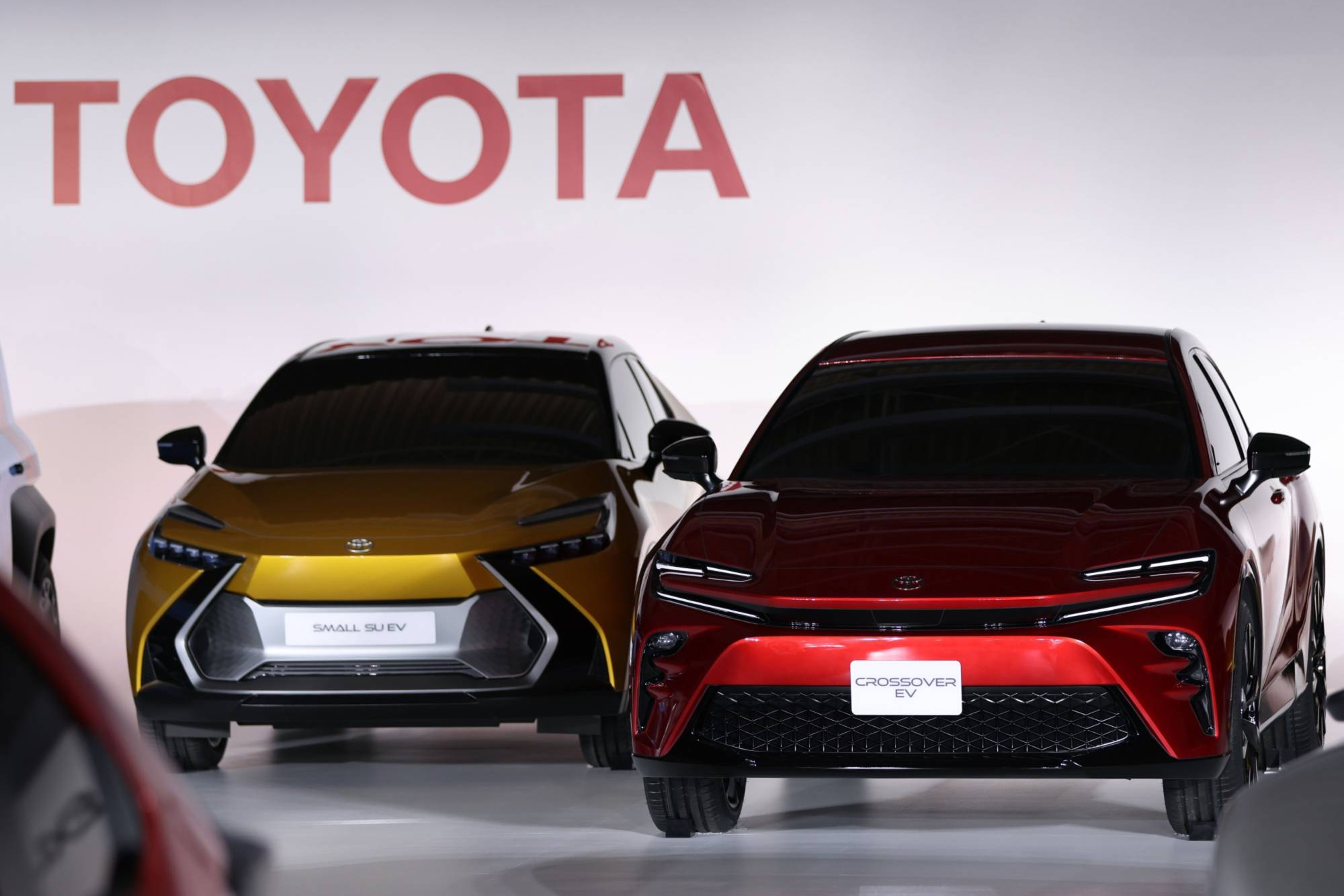
Toyota scrambles for EV reboot with eye on Tesla

Image credits- The Japan Times

Furthermore, a working group within Toyota has been charged with outlining plans by early next year for improvements to its existing EV platform or for a new architecture, the four individuals said. In the meantime, Toyota has suspended work on some of the 30 EV projects announced in December, which according to the sources and a document reviewed by Reuters include the Toyota Compact Cruiser crossover and the battery-electric Crown.

According to Toyota, it was committed to carbon neutrality but declined to comment on specific initiatives. “In order to achieve carbon neutrality, Toyota’s own technology – as well as the work we are doing with a range of partners and suppliers – is essential,” the company said as stated by Reuters. The revamp under consideration could slow the rollout of EVs already on the drawing board. But it would also give Toyota a chance to compete with a more efficient manufacturing process, as industry-wide EV sales run past Toyota’s earlier projections.

Setting benchmark

As part of the review, Toyota is considering a successor to its EV-underpinning technology called e-TNGA, unveiled in 2019. That would allow Toyota to bring down costs, the people said. The first EV based on e-TNGA, the bZ4X crossover, hit the market earlier this year although its launch was marred by a recall that forced Toyota to suspend production in June. Production resumed earlier this month.

The review was triggered in part by the realization by some Toyota engineers and executives that Toyota was losing the factory cost war to Tesla on EVs. Toyota designed e-TNGA so that EVs could be produced on the same assembly line as gasoline cars and hybrids. That made sense based on the assumption Toyota would need to sell about 3.5 million EVs a year, roughly one-third of its current global volume, by 2030 to stay competitive, as stated by certain sources according to Reuters. But sales of EVs are growing faster. Automakers globally now forecast plans for EVs to represent more than half of total vehicle production by 2030. The person leading Toyota’s EV review is Shigeki Terashi, former chief competitive officer, according to six people with knowledge of the work, including two people close to Toyota.

The post Toyota considering a reboot of its EV strategy to compete with Tesla appeared first on TechStory.


Google Removes 16 Apps from its Play Store

According to recent reports, Google has removed 16 apps from its play store. These are the apps that reportedly committed ad fraud. They did this by opening web pages in the background while pretending to be a real user. Read the entire article to learn more about this news.

About the apps

These apps that have been removed from the app store were pretending to be real users and were proving to be bad for android users as they led to high battery drainage and use of a lot of data. Before they were removed, they had about 20 million downloads. According to the reports provided by Ars Technica, the apps which have been removed from the play store helped the users perform basic tasks such as visiting a website using a particular link, scanning a QR code, etc, which is why these apps are called utility apps. Quick Note and 8k- Dictionary is some of the apps that have been removed among the 16 of them.

About Google

Google is most people’s go-to search engine whenever they need to know something. The app has managed to make a name for itself so much so that people trust it to provide them with the right facts. The aim of the company is also to do just that. It wants to provide people with abundant information so that they never use it as an excuse to not move ahead in life. The company aims to help people become more knowledgeable by providing them with the right information and facts to back it. Sundar Pichai is currently heading the company.

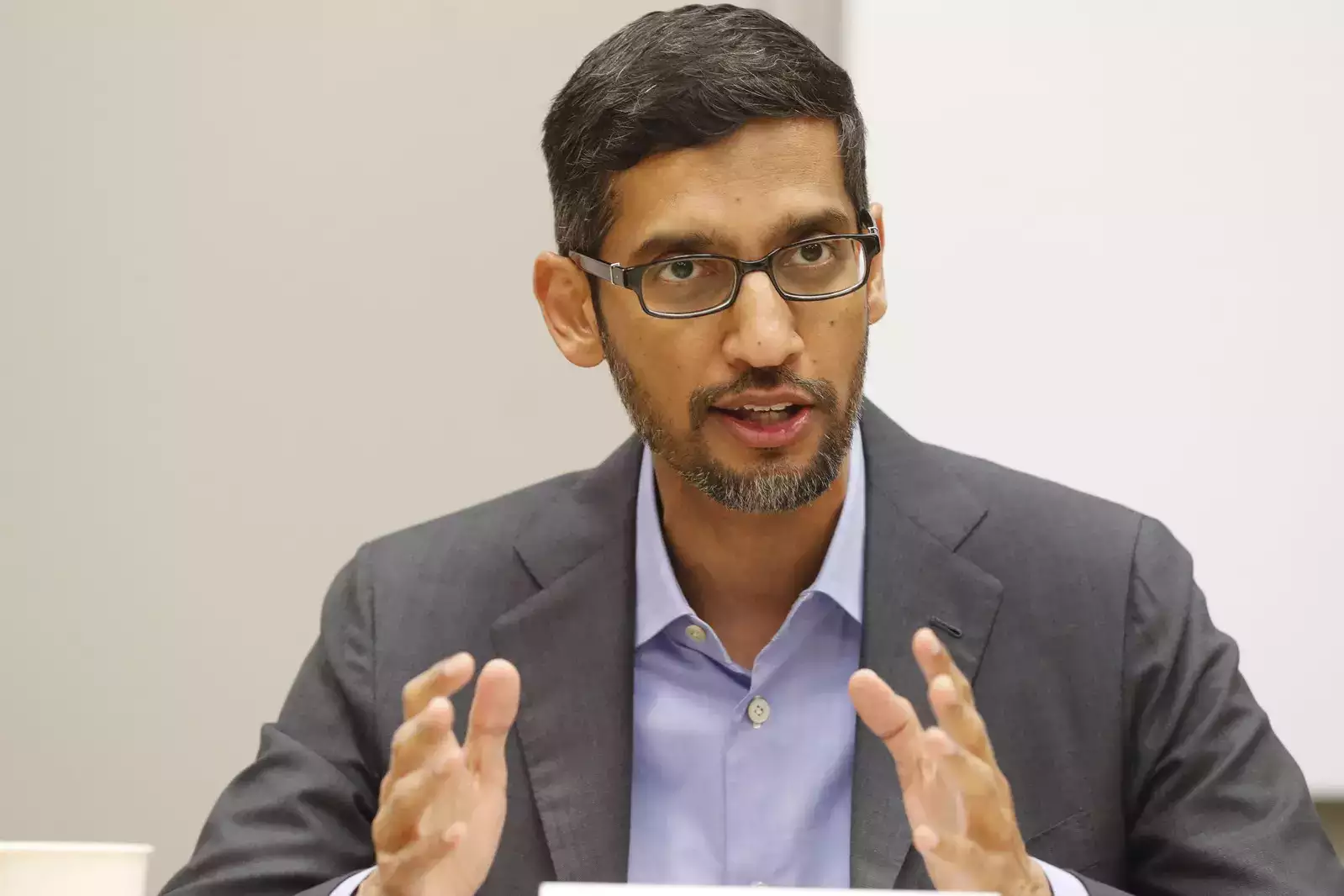
Sundar Pichai at an event

Source: The Times of India

Sundar Pichai

Sundar Pichai is the CEO of Google. Since becoming the head of the company, he has done nothing but taken it in the direction of success. Google is one of the most successful companies in the world. The majority of people in this world trust the company and have full faith in the information that it provides. Sundar Pichai was an ordinary individual and his way to success continues to be an inspiration for every youngster who aspires to make it big in the world. Sundar Pichai is a classic example of how your struggles should not define you but should push you forward to do better. Before being the position of CEO, he worked with the company for many years and has made a significant contribution to its success. “It is important to follow your dreams and heart. Do something that excites you” is what the Google CEO believes in.


The post Google Removes 16 Apps from its Play Store appeared first on TechStory.


Kraken blocked its Russian customers after EU sanctions on Russia

Kraken, the crypto exchange in the US, has decided to freeze the accounts of its Russian customs. The crypto and digital aggregators decided to come to these actions considering the EU sanctions and Russia’s political actions against Ukraine. The network noted it will allow the customers to withdraw their cryptos before the freeze is materialized.

Kraken blocked its Russian customers after EU sanctions on Russia

source : bitcoinmagazine.com


What is Kraken?

Kraken is a bank and cryptocurrency exchange platform based in the US. The digital fintech company started its operations in 2011. The Kraken is the very first platform of bitcoin exchange which was listed on the terminals of Bloomberg. The company is valued at approximately $10.8 billion in crypto assets as of the summer of 2022.

Why has the EU imposed sanctions on Russia?

The economic sanctions were imposed by the European Union on Russia considering the political and social interference of Russia in its neighboring country Ukraine last year. The issues escalated in the last quarter when Russia announced a full-fledged war against Ukraine for all its political motives in Russia. Since then Russia has been in neck-to-neck competition with all the international resources and allies above Ukraine.

How do sanctions impact the country’s economy?

The actions of Russia are considered politically unethical as Russia is trying to use its political powers to suppress the anatomy of its neighboring country Ukraine. Along with that Russia is considering these moves as the motive to reduce the existence of Ukraine as a separate country but as an integral matter of Russia. Russia wants to work on these motives against the police sentiments of all the Ukrainian citizens.

Russia, one of the largest economies in the world as a country is facing unrest from its native citizens as well for all such political activities, which are impacting its negative public picture to the world. This political action by Russia has impacted the trade relations of Russia with other global economies and by the end of august 2022, Russia is imposed by more than 30 countries under the economic sanctions.

What are the other crypto platforms banning Russians?

Apart from recent actions by the Kraken cryptocurrency platform other platforms like blockchaincom and CryptoCom have also blocked the access of their Russian customs from the platform.

These cryo blockades for all the Russian customers can be evaluated from all political actions of Russian governments against Ukraine and till the time the relations between Russia and Ukraine have not resolved, these political sanctions from various countries and private companies will continue against Russia and its native citizens who are using the global services.

The post Kraken blocked its Russian customers after EU sanctions on Russia appeared first on TechStory.