Redirecting you to our exclusive offer…

If you are not redirected automatically, click here.

Thanks for visiting! Your offer will open shortly.

This is default featured slide 1 title

Go to Blogger edit html and find these sentences.Now replace these sentences with your own descriptions.

This is default featured slide 2 title

Go to Blogger edit html and find these sentences.Now replace these sentences with your own descriptions.

This is default featured slide 3 title

Go to Blogger edit html and find these sentences.Now replace these sentences with your own descriptions.

This is default featured slide 4 title

Go to Blogger edit html and find these sentences.Now replace these sentences with your own descriptions.

This is default featured slide 5 title

Go to Blogger edit html and find these sentences.Now replace these sentences with your own descriptions.

Wednesday, September 1, 2021

The Pokémon Go task force report is here and it's lacking

What you need to know

  • After a month of boycotting, Niantic's task force reports to the Pokémon Go community.
  • Niantic commits to a bimonthly Developer Diary.
  • Report repeats news from the past week.

On August 1, 2021, Niantic removed pandemic bonuses for Pokémon Go in New Zealand and the US, prompting boycotts, petitions, and a flood of criticism across social media. When this upset culminated into the "Pokémon No Day" on August 5, Niantic responded to the community with a weak promise and a delay. It would form a task force that would meet with "community leaders" to discuss changes and report back to the community on September 1.

While many were quick to criticize this response, Niantic surprised the community by reinstating pandemic bonuses one week ago. Further, the bonus which served as the focal point of the boycott, the extended radius on PokéStops and Gyms, would be a permanent addition to the game. Niantic also announced a change to bonuses, which will now be global and tied directly to the current Pokémon Go Season.

Through all of this, Niantic has continued promising to address the community on September 1 with the results of the task force. Well, September is here and Niantic's promised announcement is lacking. Although there were vague promises of changes, both in game and in how Niantic engages with the community, there really isn't much to this announcement, despite how Niantic has teased it.

Penned by Pokémon Go's executive producer, Steve Wang, the announcemnet confirmed Pokémon Go will be keeping the extended radius. Additionally, he admitted that the attempt to change bonuses on a country-by-country basis was a "rough learning experience". The only new information in this announcemnet was the acknowledgement that Niantic has not handled communication well and the promise of a Developer Diary that will be released every other month. Responses from the community thus far have been mixed, with many wondering why Niantic bothered waiting in the first place.

Are you satisfied with Niantic's response to the community? Would you like to see the company take more concrete steps towards listening and responding to player feedback? Let us know in the comments below and be sure to check out our best Pokémon Go accessories so you can be fully equipped on your Pokémon Journey!


Don't buy this Apple product this year

Someone at Apple dropped the ball and didn't know the time.

By my count, I've been covering Apple events for 12 years across various websites. At least five years ago, I came up with a rule that has never left me down:

After August 15, believe the Apple rumors.

For months, we hear various rumors about Apple's next-generation devices. Early each year, no matter the product, the rumors are all over the place. I believe the uncertainty is because leakers get confused between what's happening with this year's products and those planned for the following year and beyond. Regardless, by the time the Worldwide Developers Conference (WWDC) finishes in June, the product rumors begin to merge — although not completely until August rolls around.

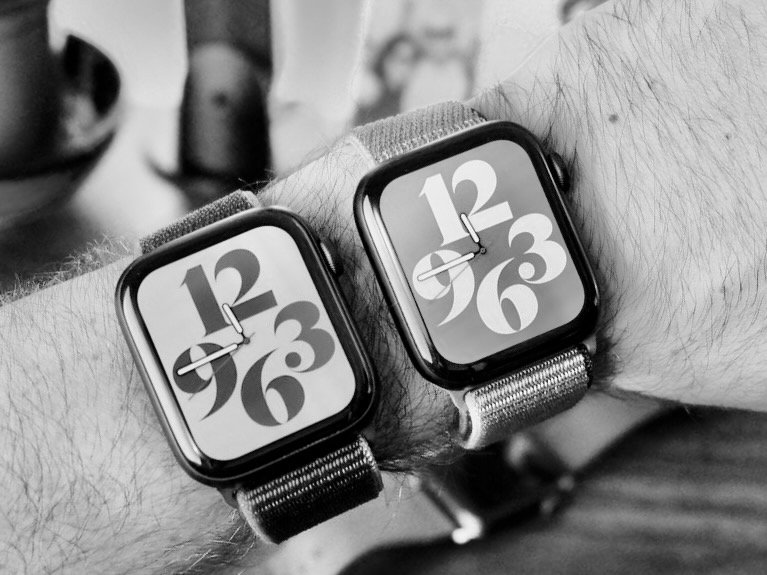
In recent weeks, and especially in the last few days, leaks about the "Apple Watch Series 7" have started lining up and sounding the same. But, unfortunately, for anyone planning on purchasing a new wearable device this year, the news isn't all that promising.

Yes, we're still getting an Apple Watch Series 7 this year, and the model will almost certainly feature a brand new design. And yet, the rumor mill says this year's Apple Watch isn't even in mass production yet because of manufacturing glitches caused by the new design. To add to the frustration, whatever new features Cupertino has planned for Apple Watch are more than likely not coming now until next year's Watch.

What's going on here?

I have no first-hand knowledge of what's happening within the Apple Watch team. However, if production issues have delayed the Apple Watch Series 7, heads are probably rolling somewhere between One Apple Park Way and China.

Does this mean the Apple Watch Series 7 announcement won't be made alongside the iPhone 13 debut it has traditionally? That's highly unlikely. However, don't be surprised if the Watch doesn't go on sale until mid-October or later, with inventory bottlenecks lasting through the holiday season.

About the new features

Then there's the issue of new Apple features. Originally, this looked to be the year Apple would finally add a blood glucose monitor to the wearable device. This game-changing tool, which has been rumored for years, would have changed how millions of diabetics, including myself, tested their blood sugar levels. Regretfully, that rumored died months ago, with many now expecting the monitor not to arrive until the 2022 Apple Watch.

And then today, The Wall Street Journal reported two new health-based features are also being worked on for Apple Watch. Both a blood pressure monitor and thermometer to help with fertility planning are apparently on the docket. Unfortunately, these two features are also not expected until next year's Apple Watch, along with improvements to the device's irregular heartbeat monitoring. In addition, future Apple Watches could also include a test for sleep apnea and provide medical guidance when it senses low blood oxygen levels. Again, not this year, but maybe next year.

Time to wait

I know you think these are only rumors. I get that, but I'm sticking with my rule that we need to believe the rumors once we get to mid-August. It's now September 1, meaning these rumors are almost certainly even more accurate.

Apple could surprise and announce a new Apple Watch in a few weeks that arrives later in the month. With its awesome new design, that wearable device might also ship with at least one new health-related feature. Though I'd like this to happen, it's more likely the this year's Watch's biggest (and only?) new feature will be its fresh look, which I'm sure will be terrific.

However, if that's the case, it might be wise for current Apple Watch owners to skip this year's model, especially those with an Apple Series 5 or Apple Series 6. Otherwise, you'll be getting more of the same and will have to make another purchase next year.

My advice: No doubt whenever it's released, the Apple Watch Series 7 will be the best Apple Watch ever created. And yet, you should either save your money for next year or put it towards this year's 12.9-inch iPad Pro, an absolutely sizzling product that's packed with new features like an M1 SoC and mini LED display.

Thoughts?

Are you planning on purchasing an Apple Watch Series 7 regardless this year? Do you think they'll even be one? Let us know in the comments below or check out our Facebook account where we're asking these questions.


No, iPhone 13 won't be a satellite phone, but...

With the iPhone 13 event maybe only 2 weeks away, and the launch just 10 days after that, the rumors are coming in hotter, heavier, and wilder than ever. Including this one from over the weekend — that the iPhone 13 could be a full-on satellite phone, able to make calls and send texts, even if you're not on a cellular network. Which sounds just way, way too good to be true. Or does it?

The report

Supply chain exfiltrator extraordinaire Kuo Ming-Chi is saying Phone 13 will support low-orbit satellite communication. Likely through Globalstar, but maybe also, eventually, Elon Musk & SpaceX's StarLink and China Satellite Communications. All thanks to a custom Qualcomm X60 modem. Something that won't be available until next year's X65 modem for the rest of the phone market.

So, of course, we immediately got a million blog posts and videos about Zo-My-God, more like iPhone sat phone. But, which also makes the kind of sense that doesn't?

I'll get to why the whole idea is so problematic in a low-earth orbiting minute, but I think the coverage comes down to the way Kuo sort of glitches out and resets the Matrix halfway through his report.

It's right here where it says, "Qualcomm has been working with Globalstar for a long time and expects to support Globalstar's n53 band in future X65 baseband chips." Which… true…

But then a black cat walks by, and…. "Therefore, if Apple wants to provide satellite communication on the iPhone 13, we believe that the most likely manufacturer to cooperate is Globalstar."

Which could also be true… one day, but completely and utterly conflated with the first part today.

Down vs. up

Now, getting a satellite signal is no big deal. The iPhone has been doing that with GPS since the 3G in 2008, and the iPhone 12 supports GLONASS, Galileo, QZSS, and BeiDou for other geographies as well. Even though, traditionally, that's been slow and so cell towers, when available, have been used to assist and speed up the process.

If you want to get a signal up to a satellite, though… yeah, that's way more difficult because physics. And a whole other antenna system. Which is currently… a lot. Like it makes the iPhone 12 mmWave windows seem like nothing a lot.

n53

So, let's focus on that first part again, the pre-black cat part. Globalstar does indeed have the n53 band for 5G NR, or New Radio, and in point of fact, Globalstar and Qualcomm have announced it's going to be included in Qualcomm's X65 modem for everybody. That means it's certainly possible Apple's gotten Qualcomm to whip up a special version of the X60 modem, the modem widely expected to be in the iPhone 13, that includes n53 a little early — an… X62.5 modem, if you will.

And, according to Globalstar, n53 can help with small-cell 5G but can also be used as a traffic channel or as an anchor for other licensed or unlicensed bands in 5G networks.

There's a way better than M. Knight Shamalan-style twist at the end of this, but while it's possible Apple could walk in a couple of weeks and just slap a sat phone antenna down on the table if this report is at all accurate, it seems far more likely Apple would just be using n53 as an anchor or something for the iPhone 13's improved 5G system. With Kuo simply conflating Globalstar's terrestrial business with their celestial business.

Emergency broadcast

As to the second part, Bloomberg's Mark Gurman has just reported that Apple is looking to use satellite networks for two new safety features: The ability to send and receive emergency text messages when outside carrier coverage areas, and the ability to report disasters when outside carrier coverage areas or the networks are simply down because of the disasters. Both would still be a technological leap forward, but maybe not a giant honking antenna leap.

Because let's be honest here, 5G is barely, barely even mainstream right now, and I'm still not convinced mmWave will ever end up being a consumer-facing technology at scale. It just reeks so much of WiMAX right now. Never mind full-on satellite phone for everyone, which is probably even further out.

When the technology matures to a point where the antennas are more feasible for an iPhone style device, though, who knows, maybe Apple is closer to shipping their own custom modems and putting their own low earth orbit satellites across the sky. Because that's been rumored before as well.


Review: The Otterbox Mobile Gaming Clip makes iOS gaming more convenient

Make Apple Arcade and iOS gaming more convenient.

With Apple Arcade and now Xbox Cloud Gaming (xCloud) on iOS iPhone and iPad users have several awesome video games at their disposal. While touch controls work for certain games, a controller can really make the experience more convenient during more intensive ones. Plus, there are some games out there that require a controller in order to play them.

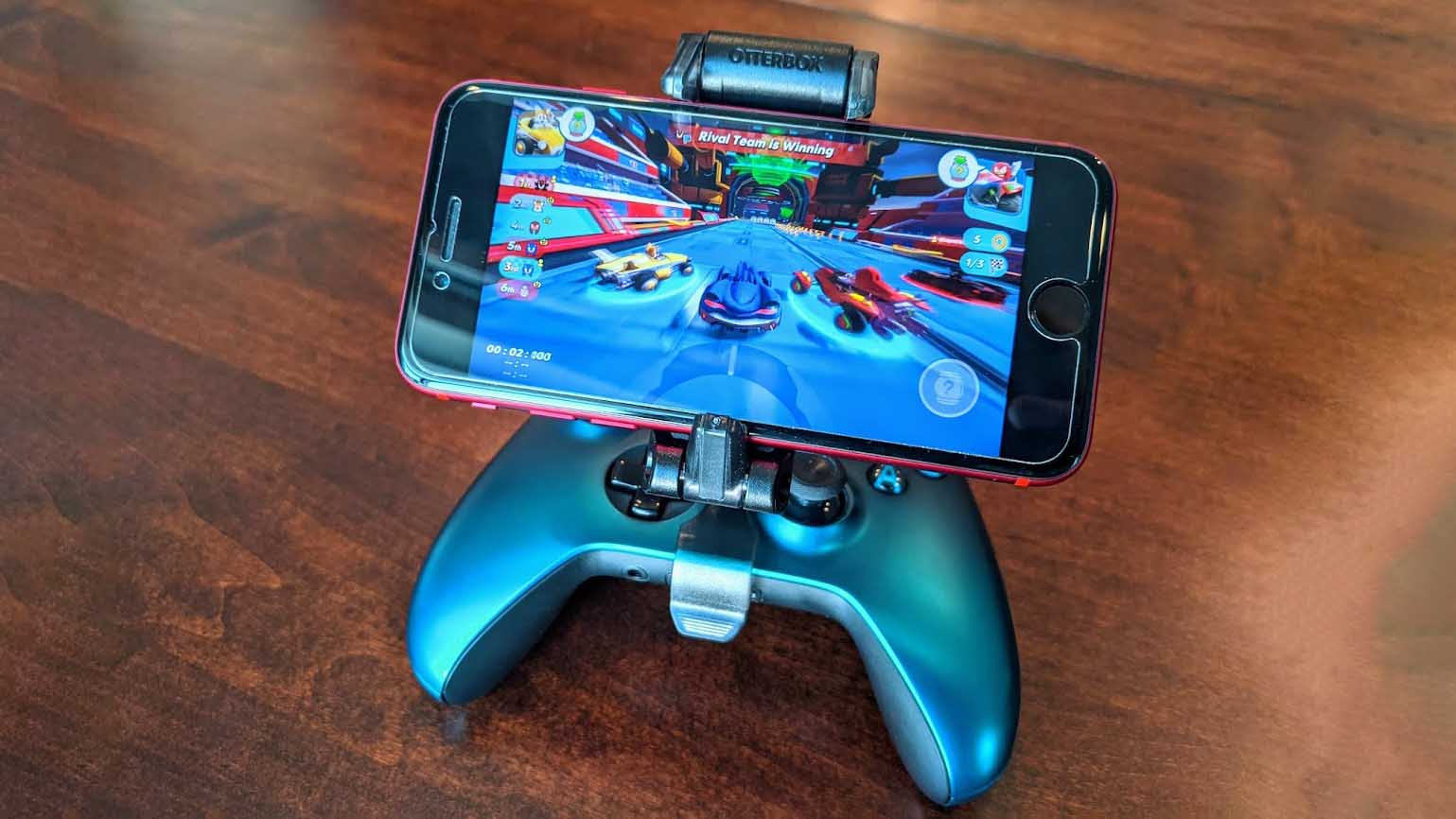
If you already have a controller around the house, mobile gaming clips can allow you to use them more conveniently. I recently had the chance to test out the Otterbox Mobile Gaming Clip. It connects directly to Xbox One controllers and works beautifully.

Bottom line: This is a sturdy attachment that works beautifully with the Xbox One controller. The compact size, easy installation, and wide phone compatibility make it a great accessory for any mobile gamer.

The Good

  • Folds into a compact size
  • Sturdy attachment to Xbox One controller
  • Tilts and extends arm
  • Compatible with most phones

The Bad

  • Expensive

$30 at Amazon

Otterbox Mobile Gaming Clip review: Price and availability

The Otterbox Mobile Gaming Clip sells for $29.99 and can be purchased from Amazon or Otterbox's website. It's definitely pricier than many other options out there. However, since it isn't a new release, it might go on sale from time to time.

Otterbox recently came out with an updated version of this accessory, the Mobile Gaming Clip for MagSafe. It sells for $39.99 and attaches to iPhones using MagSafe technology.

Otterbox Mobile Gaming Clip review: What's good

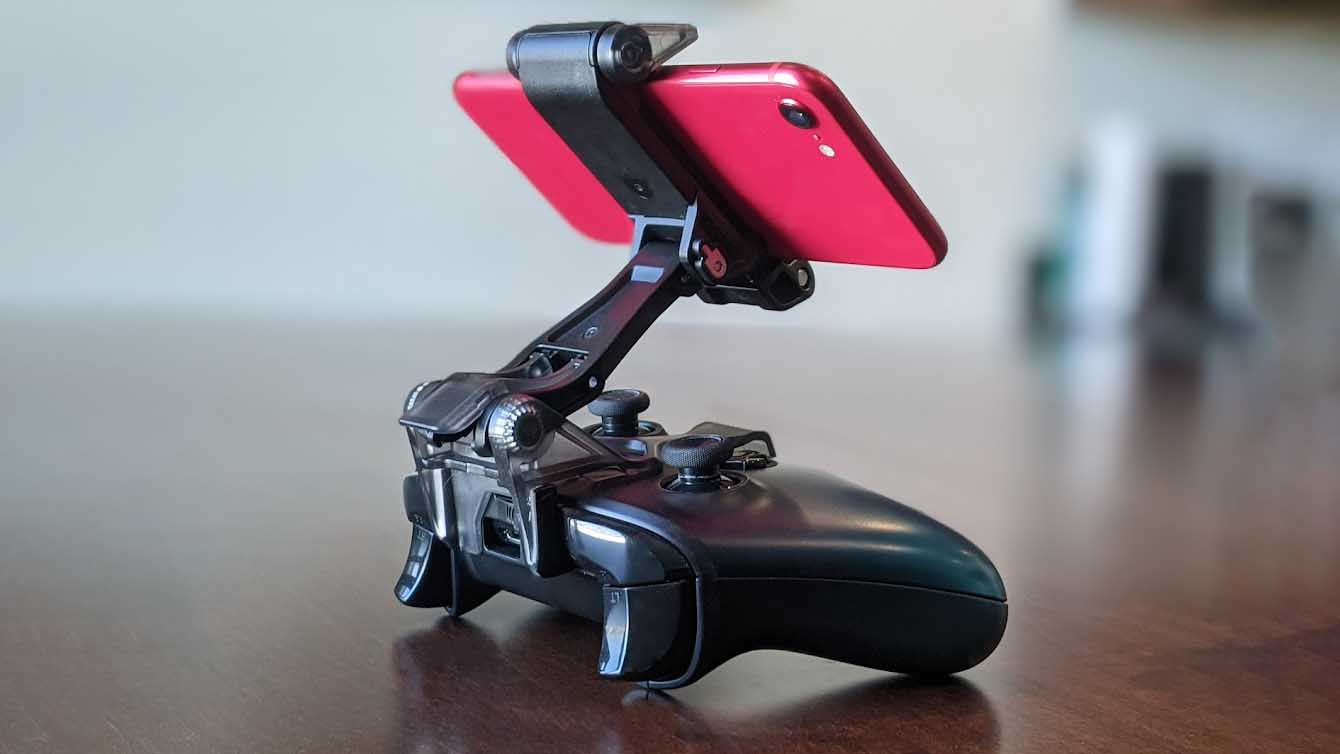
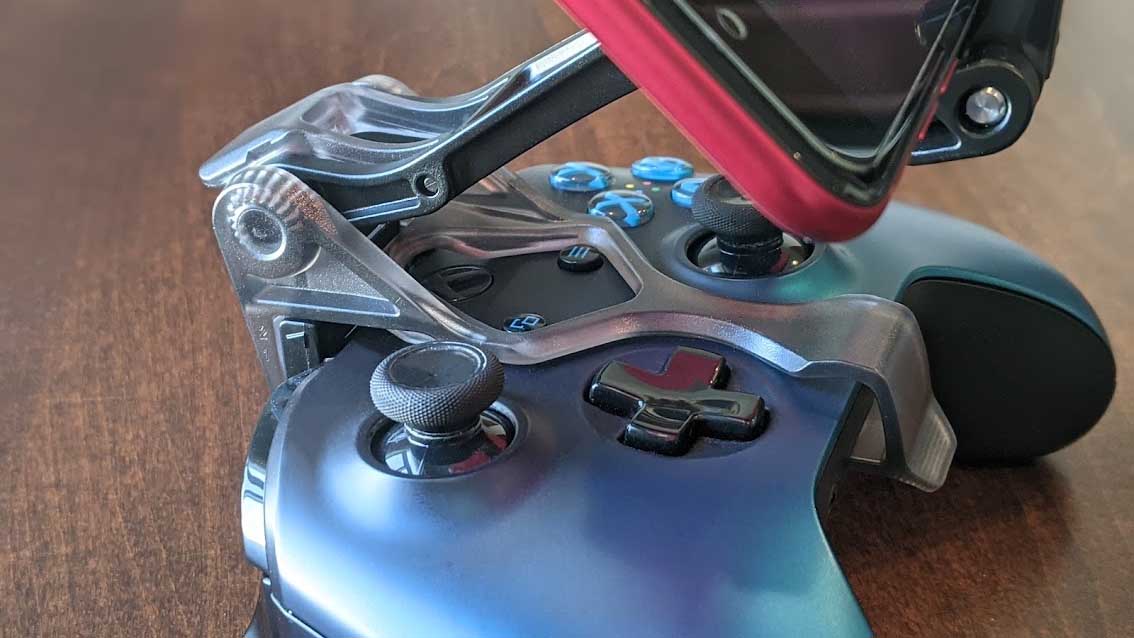
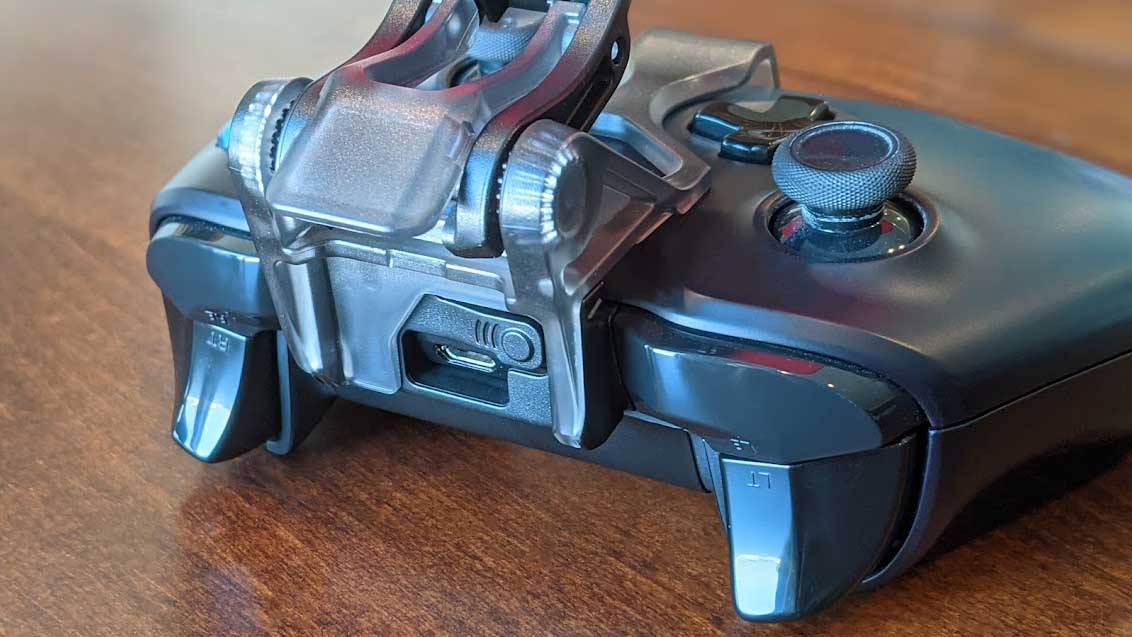
This clip is effortless to install. I just slip it over the Xbox One controller and make sure the plastic on either side goes into the controller's ports. Then when I want to remove it, I just pull up on the tab on the bottom of the controller and slip it off. While installed, it is very sturdy. I shook the controller around violently just to see what would happen, and both the clip and my phone remained in place.

The arm locks into place but can extend higher or lower, allowing me to get it at the perfect distance from my face. I'm also able to tilt the top of the arm so that the screen is displayed at varying degrees. This made playing games incredibly comfortable and felt natural. Once I had connected my iPhone to the Xbox One controller, I was set to play any mobile game with controller support.

I love that the clip can fold up into such a compact shape. The plastic feels very durable, so I can throw it into my travel bags, purse, or pocket and not worry about it getting damaged. The actual area where the phone is held extends a couple of inches, and there are two prongs above the phone and one below to hold most iPhones and Android phones in place. These prongs manage to do this without getting in the way of the screen. There's also a textured grip here that prevents phones from sliding around. It all works together to make a very sturdy accessory.

Otterbox Mobile Gaming Clip review: What's not good

This is one of the most expensive mobile gaming clips I have ever seen. I could understand the price if it offered something special like wireless charging or something like that, but this is too much. That being said, it works incredibly well, and I know my phone will never fall off while installed.

Otterbox Mobile Gaming Clip review: Competition

The best iPhone mounting clips for controllers come in a variety of sizes. Some are specifically made for specific controllers, while others are more versatile. If you don't have a controller yet, you should get the Rotor Riot Gamepad. It's both a controller and a clip in one, and it's MFi certified.

If you're simply looking for an inexpensive gaming clip for PS4 DualShock Controllers, then the OIVO Controller Phone Clip Mount is a perfect choice. It's easy to install and works with most iPhones.

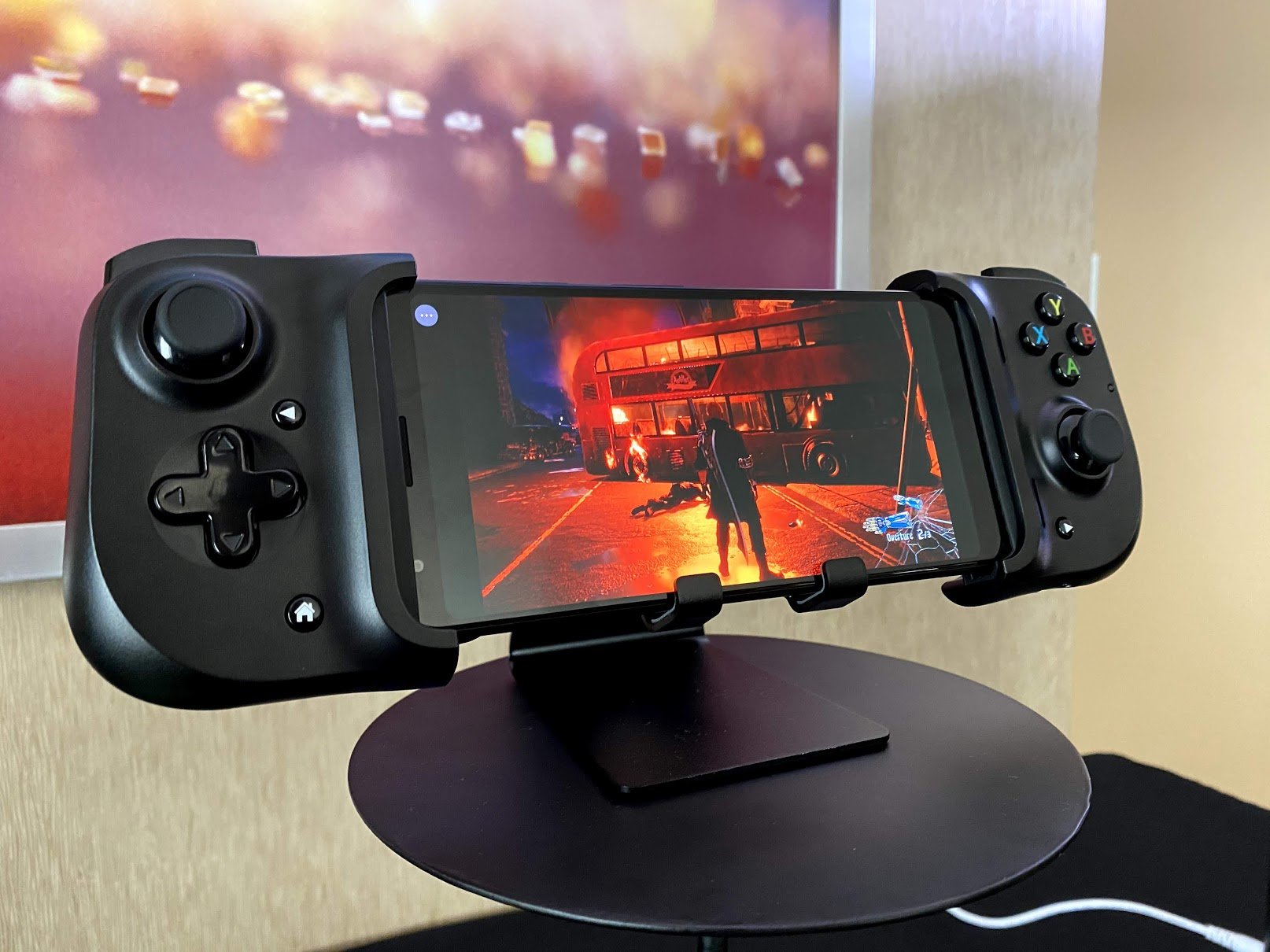
If you're more interested in a controller that connects to the iPhone itself, I highly recommend checking out the Razer Kishi for iPhone. It comes with various inserts allowing it to work with most iPhones, and the button layout looks and feels intuitive. In some ways, it's like it transforms your phone into a Nintendo Switch.

Otterbox Mobile Gaming Clip review: Should you buy it?

You should buy this if ...

  • You regularly play games on your phone
  • You already own an Xbox One controller or want to own one
  • You want a sturdy phone clip

You shouldn't buy this if...

  • You don't play mobile games much
  • You don't like the feel of Xbox One controllers
  • You want something less expensive.

Gaming clips are really the way to go for anyone taking advantage of Apple Arcade and Xbox Cloud Gaming (xCloud). The Otterbox Mobile Gaming Clip is a reliable option that will really keep your phone securely in place regardless of your movements. It's easy to install and won't damage your phone or your Xbox One controller in the process. It really does make for a fantastic gaming clip.

4.5 out of 5

However, it is incredibly costly. More so than many other options out there. If you don't want to spend that much on a gaming clip for Xbox One, I suggest you look elsewhere.

Otterbox Mobile Gaming Clip

Bottom line: Attach your phone and your Xbox One controller together in order to play Apple Arcade and Xbox Game Pass games more easily.

$30 at Amazon


Stay in great shape with an external heart rate monitor and Apple Watch

Even though your best Apple Watch, like the Apple Watch Series 6, comes with a heart rate monitor built-in, sometimes it's just not enough, especially if you're training for a marathon or are doing more intense workouts. The reason for this is because the Apple Watch only has so much battery life, and these more intense sessions can drain the battery faster than you'd like because of the constant heart rate monitoring. Instead, you should consider something like Scosche's Rhythm+ 2.0 Monitor Armband for the hardcore workouts and training sessions because it's our preferred external heart rate monitor for Apple Watch.

Best for most: Scosche Rhythm+ 2.0 Monitor Armband
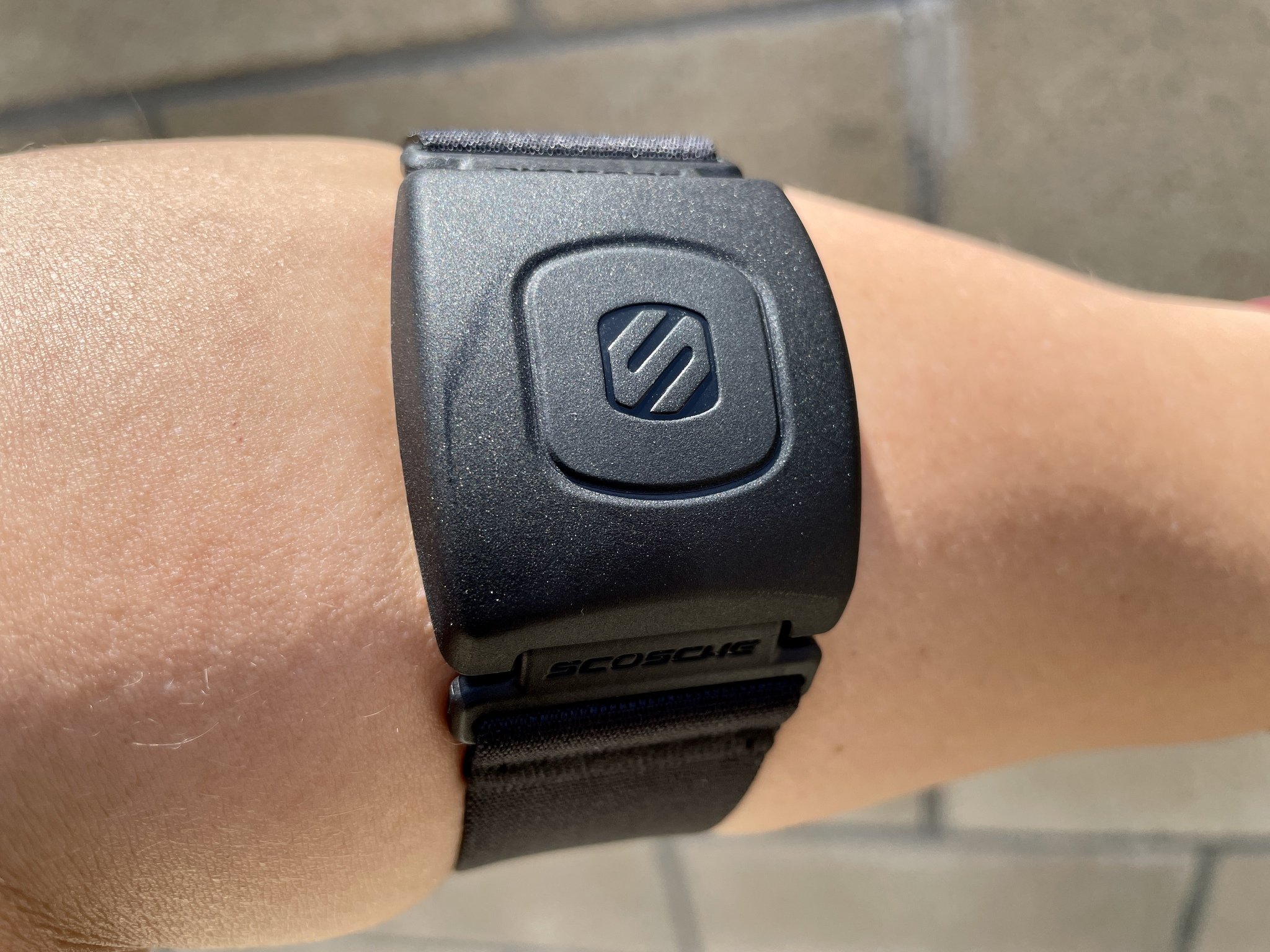
We have tested the Scosche Rhythm+ Monitor Armband and can safely consider it the best external heart rate monitor for Apple Watch. The water-resistant (IP68) device connects to an adjustable neoprene strap, and it is dustproof and waterproof (it can be submerged 1.5 meters for 30 minutes) for even the toughest workouts. While you can wear it anywhere on your arm, Scosche recommends the forearm. (I did my initial tests with it in that location, as well.) The first generation Rtythm+ had a strong 8-hour battery life, but the new Rhythm+ 2.0 version can do around 24 hours of workout time before it needs a recharge, which is even more impressive.

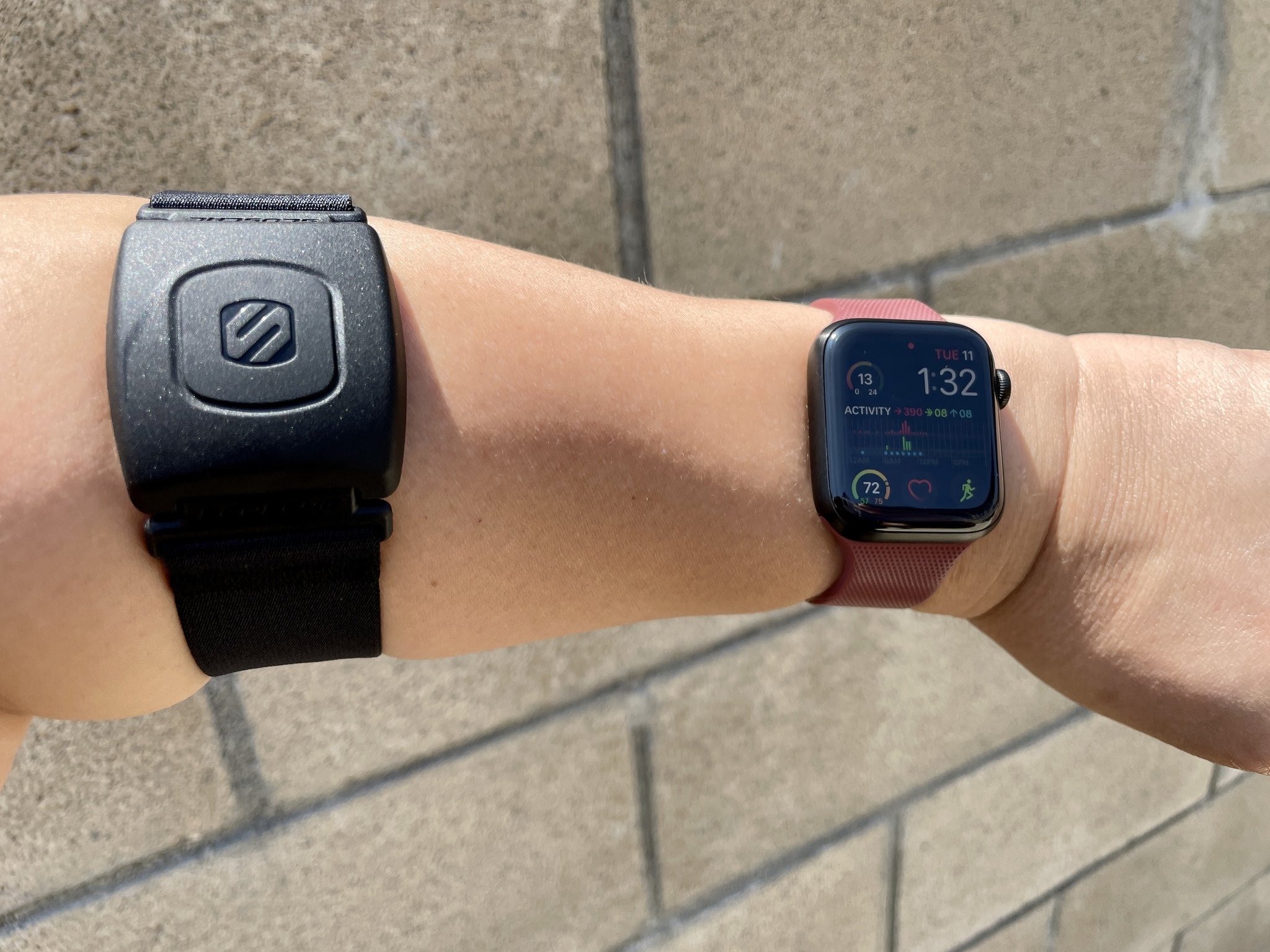
Both the dark gray tracker and strap are slim and stylish, given that you'll likely be wearing them in a visible location on your arm. You can slip a shirt on over the Rhythm+ if you want to hide it, but it's a nice enough looking tracker to leave it visible. It does look a little goofy when both the Apple Watch and tracker are on the same arm, but until we have magical nanobot implants, such is our connected device lifestyle.

In practice, it's significantly more comfortable than wearing a chest strap during heavy-duty workouts while being about as accurate. The Rhythm+ uses green and yellow oximeter sensors (described as "PerformTek biometric sensor technology") to get a more precise look at your heart rate and blood flow than just the Apple Watch's green sensors alone. Having more sensors also means that it updates much more frequently than the Apple Watch.

I wore the Rhythm+ 2.0 for about a week, along with my Apple Watch, for my regular walks and elliptical workouts. It was fairly accurate and measured more frequently than my Apple Watch did, so it was only off by one or two points. The only real concern with the Rhythm+ 2.0 is the fact that it can get a little tight if you do arm-related exercises since the neoprene strap does flex and stretch, but it only gives so much.

Unlike many other chest strap options, Scosche doesn't offer a dedicated app for viewing your recorded heart rate data. Instead, you can look at it in Apple's Activity or Health apps or download a third-party option like Cardiogram. If you want to save some dough, the first generation Rhythm+ is also still available for slightly less — just be warned that it will only have 8-hour battery life versus the 24 hours of the latest version. The new Rhythm+ 2.0 also uses the same charging cradle as the Rhythm24, which we mention below.

Pros:

  • Lightweight
  • Breathable band
  • Frequent heart-rate readings
  • Water-resistant

Cons:

  • Tight fit when lifting weights

Best for most

Scosche Rhythm+ 2.0 Heart Rate Monitor Armband

An armband that monitors without fear of battery drain.

If you're looking to get better heart monitoring without going full in on the chest strap, get this forearm monitoring instead.

Best for Apple Watch: Twelve South ActionSleeve 2
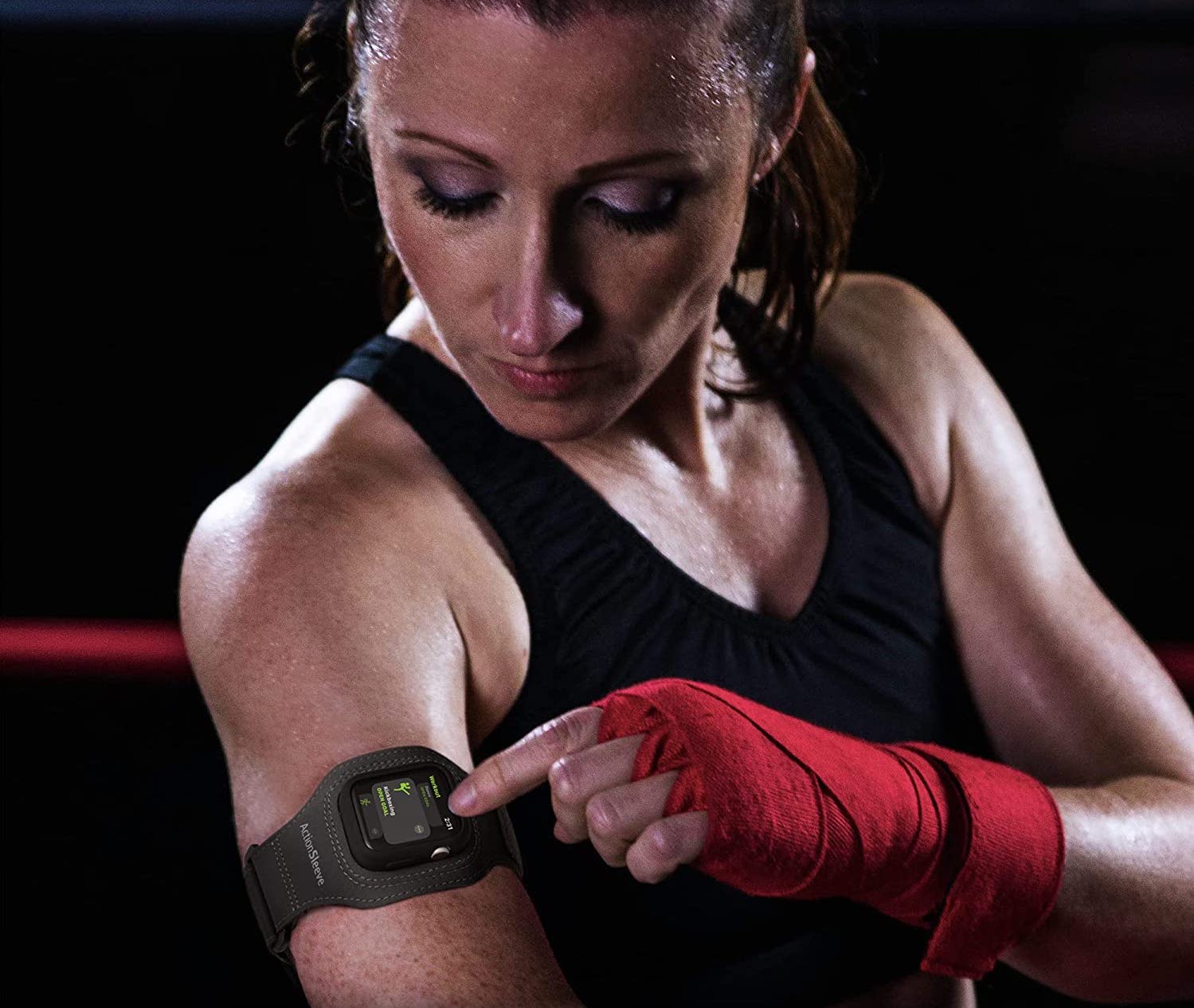
It's a band that you pop the case of your Apple Watch into and strap it to your upper arm. This keeps the Watch's sensor securely to your skin, so you get a more consistent reading, especially if you're bending your wrist a lot while you exercise.

Your Apple Watch, sans band, fits into a mount with the backside exposed, so the Watch's sensors are unobstructed. The mount has a raised silicone border to protect the Watch from scratches (and keep it in place).

If you're happy with the performance of your Apple Watch's heart rate sensor but don't want it wrapped around your wrist while you work out, get the ActionSleeve. It's the perfect alternative to the best external heart rate monitor for Apple Watch.

Twelve South recently updated the design of the Action Sleeve, but if you want to save some money, the first generation is still available on Amazon for about half the price of the new one.

Pros:

  • Works with Apple Watch
  • More accurate readings thanks to positioning
  • Affordable

Cons:

  • Uncomfortable for bicep workouts

Best for Apple Watch

Twelve South ActionSleeve 2

$40 at Amazon

$40 at TwelveSouth

Lets you use your Apple Watch.

If you want to stick with the Apple Watch's heart rate monitor but want a little more accuracy, the ActionSleeve is perfect.

Best for accuracy: Polar H10 Heart Rate Monitor

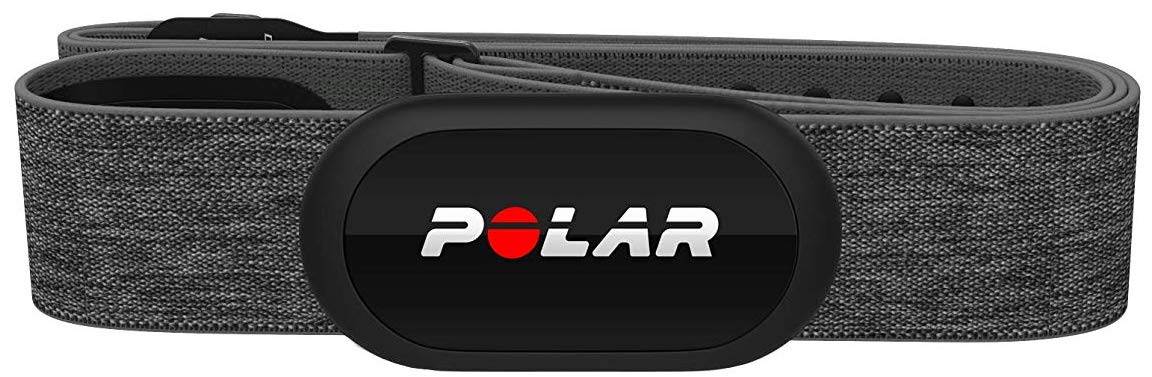
The H10 connects to your iPhone or Apple Watch using Bluetooth LE, though you'll want to use one of Polar's apps to get Polar's specific readings — I used Polar Beat. It's not my favorite app (and requires an in-app purchase if you want to see your heart rate/fat burn breakdown), but it does the trick. Your heart tracking will also log in to Apple's Health app after you connect it, allowing you to take your fitness data elsewhere. And if you're not near a connected device, the H10 has a small amount of onboard storage, allowing you to log a workout even without your devices present.

Note: We've seen several users run into an issue where the H10 appears on the iPhone, but not the Apple Watch. To fix this, you'll want to pair the H10 to the Apple Watch first before connecting it to your iPhone — or disable Bluetooth on your iPhone from the Settings app before attempting to pair with Apple Watch.

Polar's H10 was by far the most accurate of the fitness trackers I tried, but it does come at the expense of having to wear a chest strap. During a run or weight training session, this shouldn't bother you, but full-contact sports might be a bit much: For me, anything strapped to my chest in derby is a potential bruising hazard — and I've seen enough cracked sternums to want to avoid that fate at all costs. So if you can get past the fact that this has to be worn around your chest, it can be considered another of the best external heart rate monitors for Apple Watch.

Pros:

  • Accurate readings
  • Syncs with Health app
  • Onboard storage

Cons:

  • Chest strap style
  • Bad app design

Best for accuracy

Polar H10 Heart Rate Monitor Chest Strap
From $86 at Amazon

From $90 at Polar

Polar's technology provides speedy fitness tracking.

This water-resistant chest strap is comfortable and offers electrode-based heart monitoring, so it's more accurate than others.

Best for runners: Scosche Rhythm24

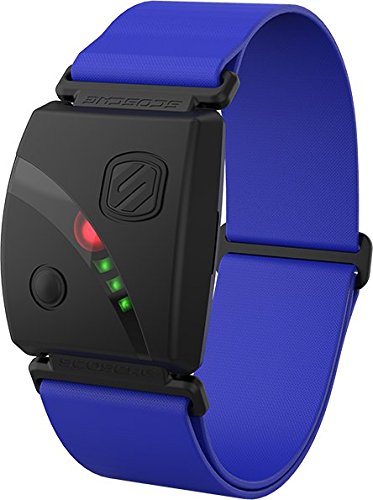
The Rhythm24 has a battery status indicator, so you'll know if it's time to recharge.

It has seven different monitor modes for different training options. You can set it for running, cycling, swimming, or just tracking your heart rate or heart rate variability for identifying stress and recovery during training. If you're training for a duathlon or triathlon, set one of the multi-modes, and it will track each of your different activities.

You can record your workout and save your training data to understand better where you need improvement.

Like the Rhythm+, which is still the best external heart rate monitor for Apple Watch, it uses yellow and green optical sensors to better accuracy with all skin tones.

I tested the Rhythm24 with daily running sessions alongside my Apple Watch. I found that the Rhythm24 was always more accurate, monitoring every heartbeat in real-time instead of updating with new information that was already behind by the time it synced.

The Rhythm24 uses the same type of armband used with the Rhythm+. I found it very comfortable during my runs but have not tried it with weight training exercises.

For just a bit more than the Rhythm+, the battery life and multiple training modes make this a much better fit with fitness fans that work out for more than just an hour or two. If you're a long-distance runner, a triathlon trainer, or just want to track your heart rate all day long, get the Rhythm24.

Pros:

  • Water-resistant
  • Longest battery life
  • Multiple workout modes
  • Support for triathlon training

Cons:

  • Expensive

Best for runners

Scosche Rhythm24 - Waterproof Armband Heart Rate Monitor
$100 at Amazon

$100 at Target

$100 at Scosche

Great for fitness buffs that are in it for the long haul.

This heart rate monitor armband has 13 hours of continuous memory storage, so leave your phone behind when you're training.

Best for training: Garmin HRM-Tri Heart Rate Monitor
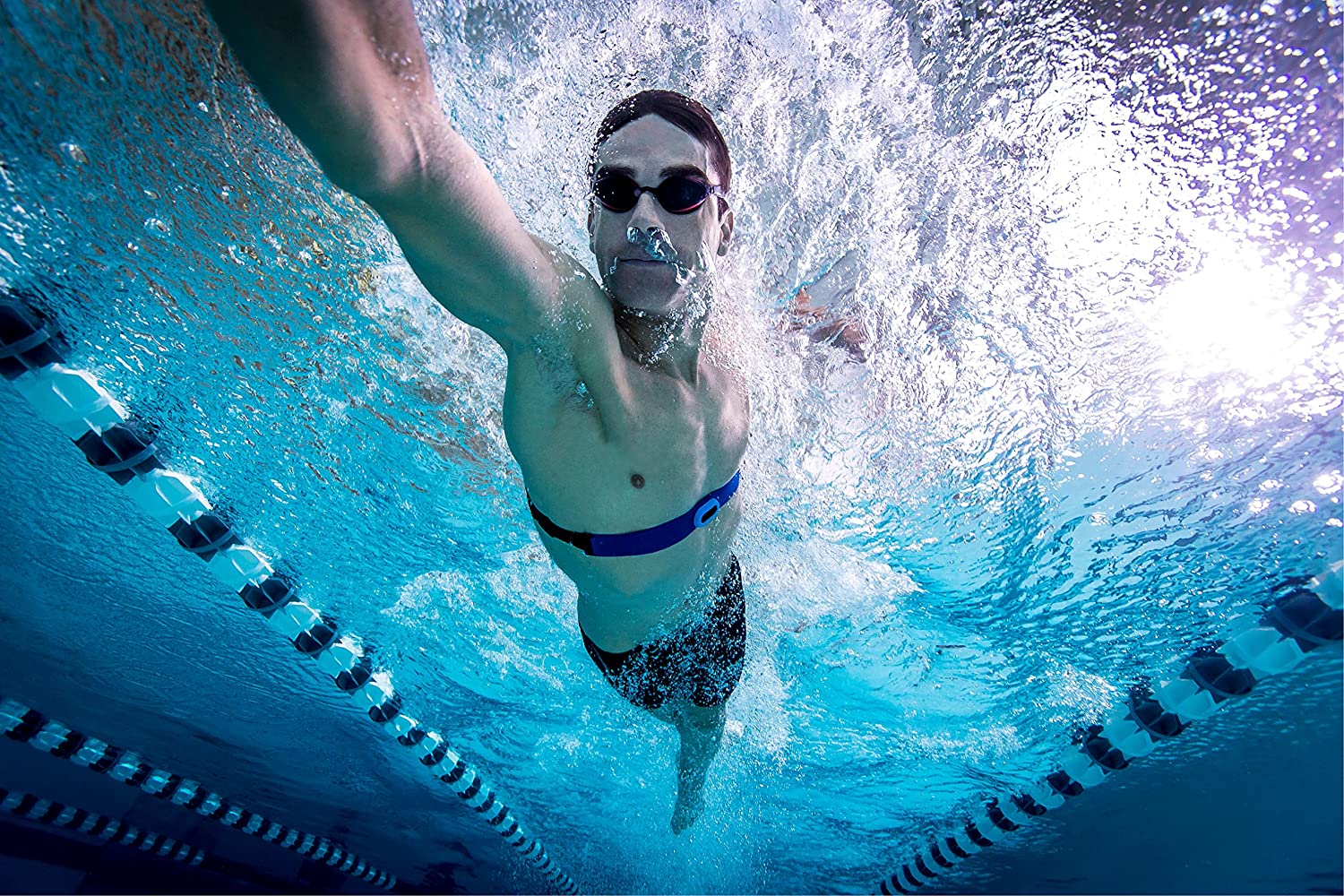
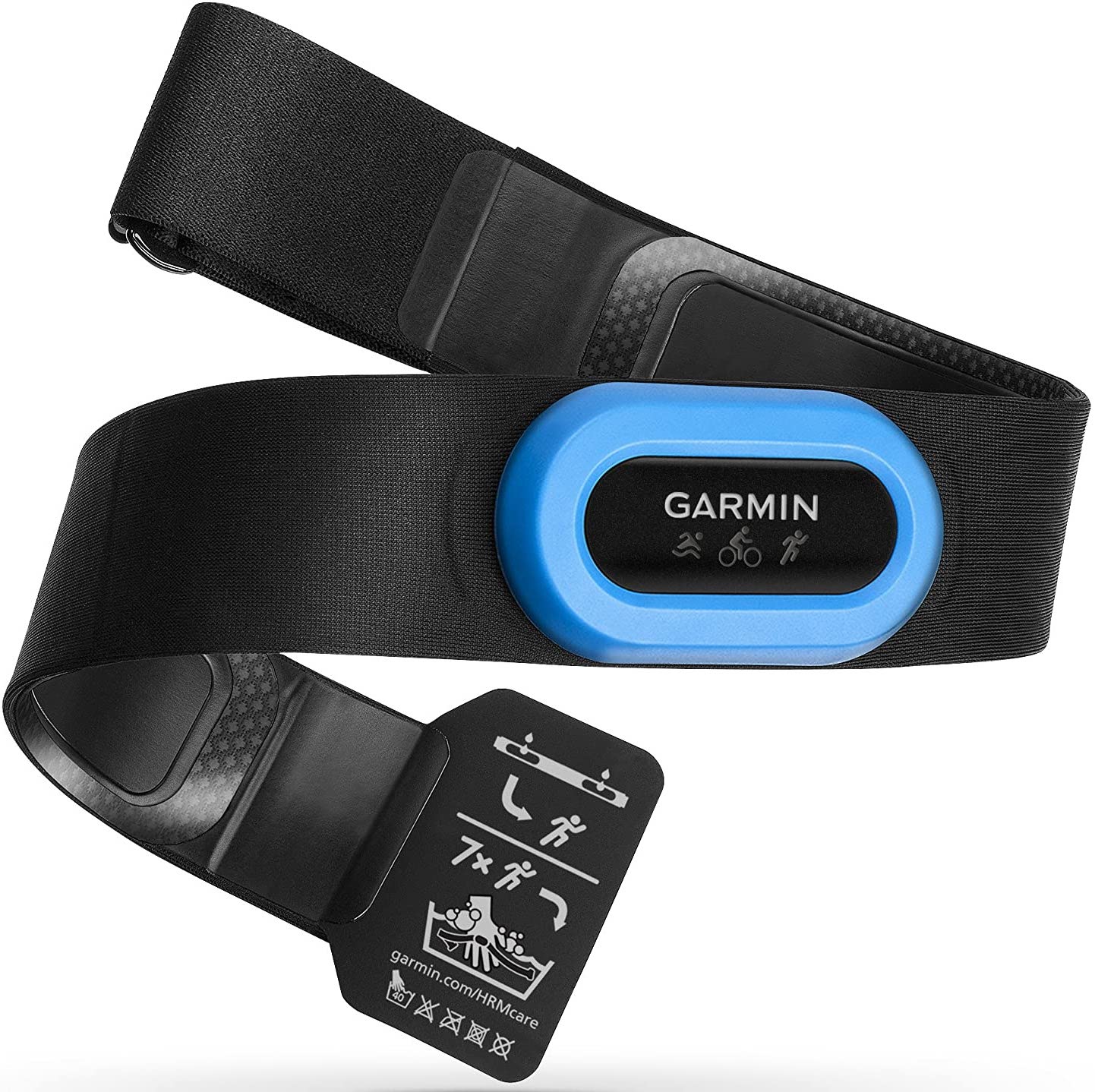
When you're training hard, you want an external heart rate monitor that won't get in the way. The Garmin HRM-Tri is one of the smallest and lightest heart rate monitor offerings from Garmin, and it will remain comfortable throughout your training.

With the HRM-Tri, it's designed to best handle running, cycling, swimming, and many more intensive activities. The monitor uses a single CR2032 battery that can last up to 10 months if you just do an hour of training a day. The HRM-Tri even provides feedback on your running form and running dynamics thanks to the accelerometer that measures torso movement when running.

As you use the HRM-Tri, it can store up to 20 hours of heart rate data from your swims and training, and this data can be forwarded to other Garmin sports watches after your session. Or you can just send your data directly to the Garmin Connect app to view your swim metrics, heart rate graphs, pace, stroke, and more.

Pros:

  • Small and lightweight
  • Comfortable to wear
  • Long battery life
  • Gives feedback on running form and dynamics
  • Great for swimming

Cons:

  • Requires CR2032 battery
  • Not rechargeable

Best for training

Garmin HRM-Tri Heart Rate Monitor
From $109 at Amazon

Designed for triathletes.

The Garmin HRM-Tri is a comfortable heart rate monitor that is perfect for training while running, cycling, or swimming.

Best for cyclists: Wahoo TICKR FIT Heart Rate Monitor Armband
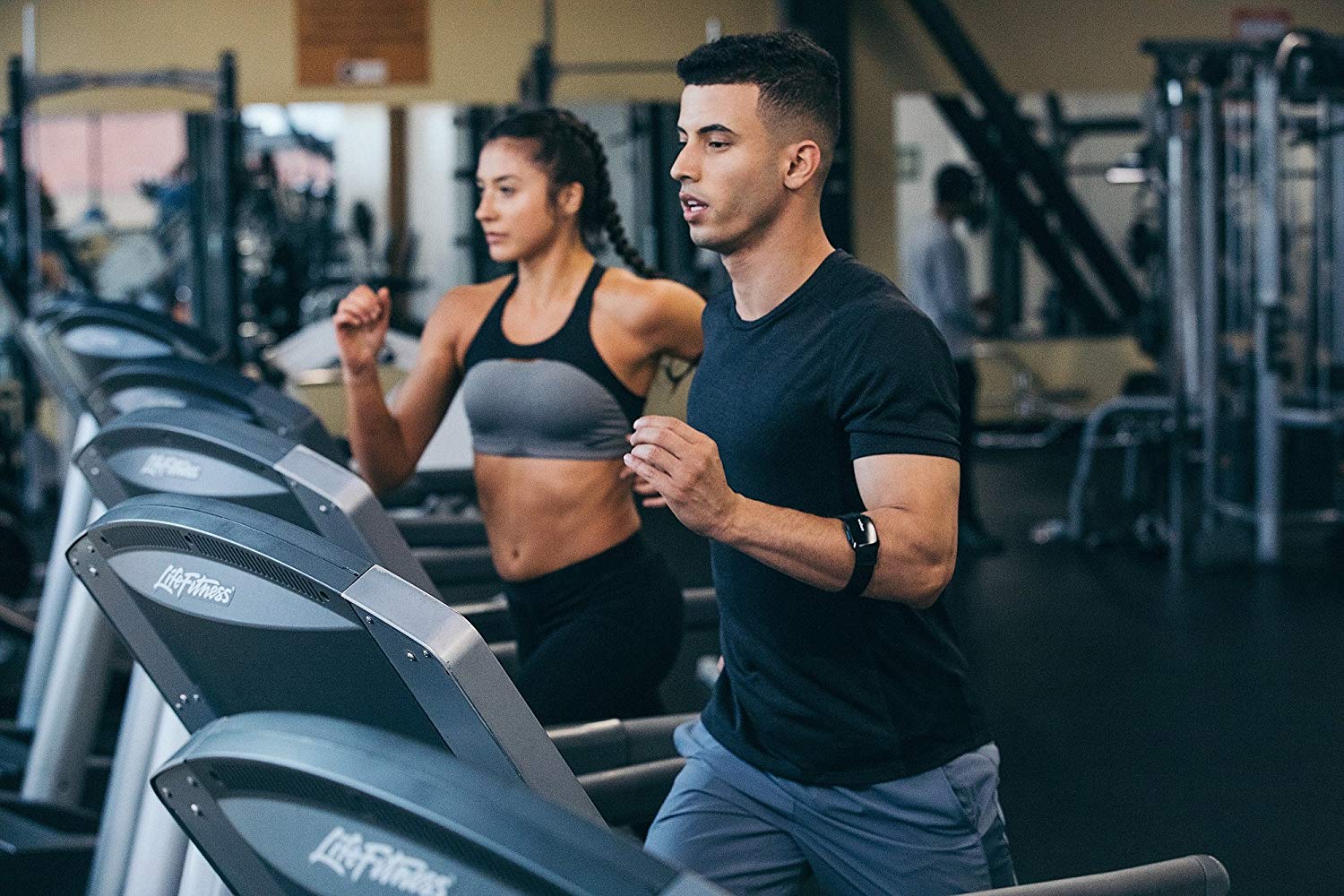
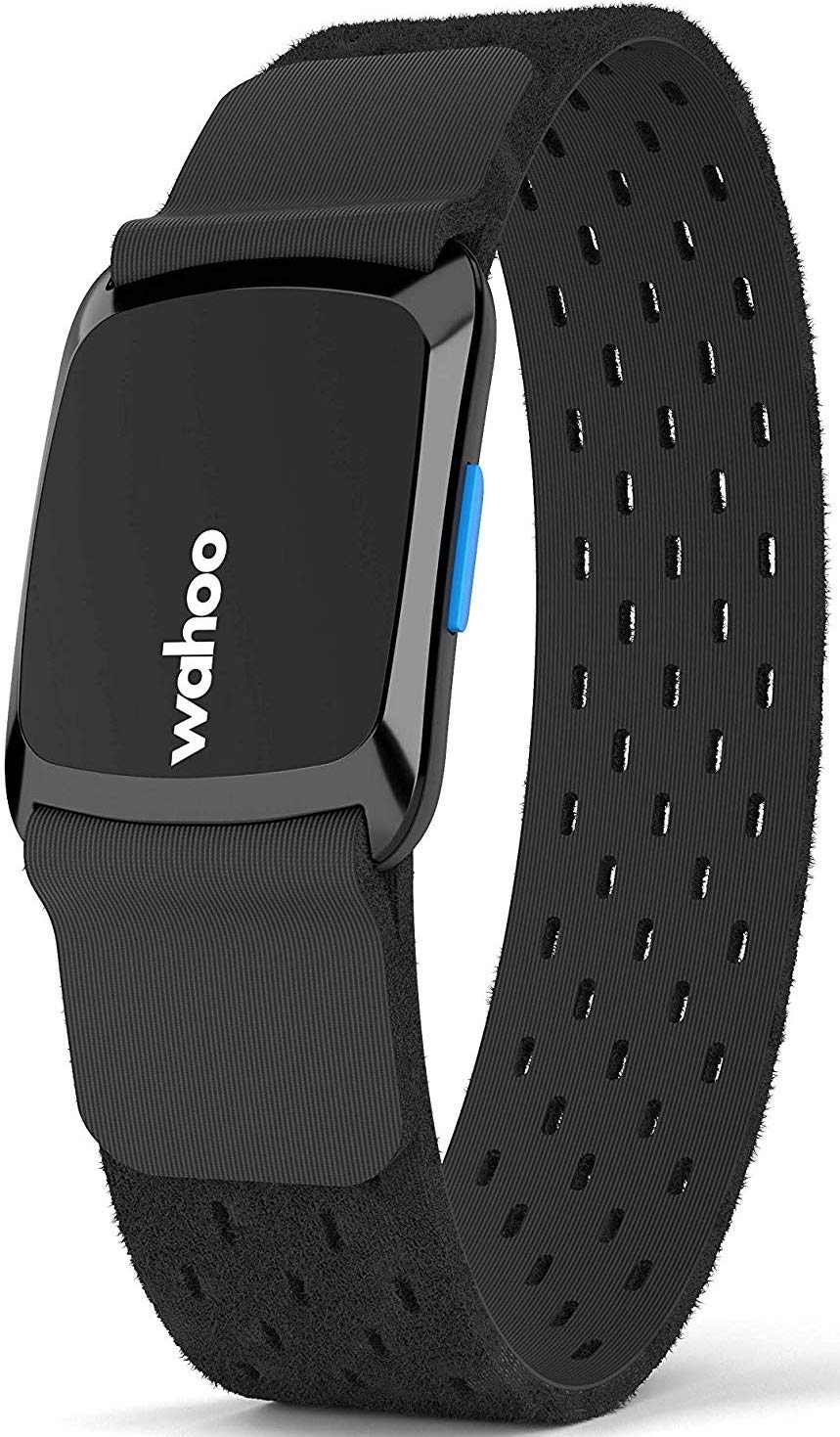
If you want to have the heart rate monitor that champions like Team INEOS, Bora-Hansgrohe, Katusha Alpecin, Ironman World Champion Jan Frodeno, Heather Jackson, and American Pro Mountain Biker Sonya Looney, then check out the Wahoo TICKR FIT.

The TICKR FIT is an armband that works best on your forearm, and you can get personalized heart rate training for more efficient workouts. With TICKR FIT, you'll track and capture your heart rate in real-time, see your training zones and calories burned on your iPhone through over 50 compatible apps since it utilizes Bluetooth/ANT+. This means it will work with not only your iPhone but tablets, GPS watches, and bike computers by Wahoo, Polar, Garmin, Apple, and many more.

If you use the Wahoo Fitness app with the TICKR FIT, you can automatically upload that data into your preferred training platform of choice, like Strava. And while it seems geared more for cycling, the TICKR FIT works well with any form of exercise. The TICKR FIT is quite accurate, comfortable, and stays in place as you exercise.

Pros:

  • Comfortable on the forearm
  • Accurate readings
  • Works with over 50 apps and many devices
  • Up to 30 hours of battery life
  • Affordable price tag

Cons:

  • No data stored on the device itself

Best for cyclists

Wahoo TICKR FIT Optical Heart Rate Monitor Armband
$74 at Amazon

$80 at Wahoo

Champion cyclists use this heart rate monitor.

TICKR FIT is comfortable and secure. It works with over 50 apps and connects to most devices for a personalized experience.

Why bother with an external heart rate monitor?

Heart rate monitoring on the Apple Watch comes at the expense of battery life — the smartwatch's health sensors account for a large majority of battery drain. As such, Apple limits how often the sensor records data, even during workouts. At rest, you'll get heart rate data every 10 minutes. During workouts, you're likely to get recordings every 10 seconds to a minute.

The wrist-based monitor can also get tripped up if you tend to do many exercises involving wrist bending or quick movement. The oximeter works by measuring the movement of your blood using light. When you flex your wrist, you can momentarily change that circulation, leading to erroneous heart readings (If you've ever seen an Apple Watch reading of "65bpm" or lower or a gray number when you're in the middle of a high-intensity workout, that's likely what has happened).

If you're worried about your Apple Watch's battery life during a lengthy workout (like a marathon, for instance), or you'd like more consistent and quick readings, consider an external heart rate monitor. These Bluetooth accessories often run off quick charges or watch batteries and offer faster readings from a location with better circulation (like the chest or upper arm). If you don't have an Apple Watch, you can use external monitors with your best iPhone to get valuable heart rate data.

We've tested several of these Bluetooth heart rate monitors to give you the best recommendation, and the Scosche Rhythm+ 2.0 Monitor Armband is the best external heart rate monitor for Apple Watch.

Get fit with the best external heart rate monitor for Apple Watch

The Scosche Rhythm+ 2.0 monitor armband is the best external heart rate monitor for Apple Watch because it's a reliable, accurate, and affordable monitor that's perfect for amateurs and fitness fanatics alike. Not only that, but it's also an eye-catching accessory that's bound to turn heads while you work up a sweat.

Plus, it's significantly more comfortable than wearing a chest strap during heavy-duty workouts while being just as accurate. The Rhythm+ uses green and yellow oximeter sensors (described as "PerformTek biometric sensor technology") to get a more precise look at your heart rate than the Apple Watch's green sensors alone and records data much more frequently. The first generation of the Rhythm+ has 8-hour battery life, but Scosche went further and made the Rhythm+ 2.0 last 3x as much, so you can get 24 hours of workouts before having to plug it back in. And another great thing about Rhythm+ is the fact that since Scosche doesn't have its own dedicated app, your data just syncs directly with Apple Health — no other app is really needed.

Credits — The team that worked on this guide

Christine Romero-Chan is a Senior Staff Writer at iMore trying her best to get back into a more active lifestyle. She has been testing out new devices and tools that will help get her back on track.

Lory Gil was the former Managing Editor at iMore who picked up the fitness mantle in place of Serenity, but she now works for Apple. She's been testing heart rate monitors on her daily morning jogs to make sure they meet our highest standards.

Serenity Caldwell was formerly the Managing Editor at iMore, and now works for Apple. She spent a year testing these heart rate monitors while working out, training for roller derby, and testing her body's limits.


Tuesday, August 31, 2021

The rate of new apps on the Mac App Store is declining

What you need to know

  • New apps on the Mac App Store have declined 12% in the last year.
  • The number of new apps per month currently sits at around 343.
  • The iOS App Store, in comparison, launches around 40,000 new apps per month.

The iPhone and iPad are still the place to be.

The Mac App Store still isn't feeling the love like the App Store for the iPhone and iPad do.

New data collected by Appfigures found that not only is the number of new apps on the Mac App Store very low in comparison to the App Store for iOS, the rate of new apps coming onto the store continues to decline.

According to the report, 392 new apps were released per month on the Mac App Store in 2020. In comparison, over 40,000 new apps were released on the App Store per month. In 2021, the average amount of new apps per month on the Mac App Store dropped to 343, a 12% decrease.

In 2020, developers released, on average, 392 new apps to the Mac App Store every month. The actual figures range between the low 300s and low 400s, so the average is a fair estimate.

For context, there App Store saw 40,000 new apps on average every month in 2020. That's 100x more.

But our story continues because so far in 2021, the average number of new Mac apps has dropped to 343, with the variance growing drastically and the low end dropping into the low 200s.

Apple has been attempting to boost the excitement around the Mac App Store lately. Most notably, the company announced that Apple silicon-based Macs, like the M1, would be able to run iPhone and iPad apps if developers did a little bit of work to bring them over.

That plan has resulting in some apps coming over from iPhone and iPad. For example, Twitter brought its social media app to the Mac. However, other big names like Facebook, Instagram, Snapchat, and TikTok haven't.


Crossy Road is coming soon to Apple Arcade

What you need to know

  • Crossy Road is coming to Apple Arcade.
  • According to Apple, the title has been reimagined for the game subscription service.

You can set a reminder for when it launches now.

Crossy Road, the beloved iPhone platformer, is coming to Apple Arcade.

Today, Apple Arcade announced on Twitter that the hilarious title is coming to Apple Arcade as Crossy Road+. According to Apple, the game has been "reimagined for Apple Arcade," but it's currently unclear exactly what changes are in store just yet.

Why did the chicken cross the road? If only @HipsterWhaleDev told us the secret to get to the other side. Jump and cluck across the streets, but watch out for obstacles along the way!

Crossy Road+ won't be the first title that game developer Hipster Whale released a title on Apple Arcade. The company also released Crossy Road Castle exclusively on Apple Arcade back in February of 2020.

If you'd like to be one of the first to get Crossy Road+ when it launches on Apple Arcade, you can preorder it now on the App Store. Preordering the title will download it automatically to your iPhone or iPad once the title goes live on Apple's game subscription service. Interestingly it does not say that it will be available on Apple TV yet, an oddity since the original release is.

Apple Arcade is the company's game subscription service which already boasts more than 100 games and is quickly approaching 200. The service costs $4.99 per month and can be shared with Family Sharing. It is also included in all tiers of the company's Apple One subscription bundles.

Game on!

Apple Arcade

$4.99 per month from Apple

Unlimited games, one price

Apple Arcade has over a hundred premium games with more added regularly each week. There is something here for everyone, and it only costs $5 a month for all you can game!