Microsoft OneDrive sync is getting native support for M1 Macs.
Those keen to ditch Rosetta can test out a public preview.
No more Rosetta emulation is required.
Fans of Microsoft OneDrive who also happen to use an M1 Mac are in for a good time thanks to the news that the Redmond outfit is launching an Apple silicon-native version of its sync app. The news comes alongside confirmation that a version of the ARM-native app is now available for public preview.
The news came via a community post by a Microsoft employee, confirming that the update is now available for those willing to install the public preview build. The update will be available to all eventually, of course, but the preview is one way people can take the native app for a spin right now.
We're excited to announce that OneDrive sync for Windows on ARM and for Apple silicon is now available as a public preview!
We know this has been a long awaited and highly requested feature, and we're thrilled to make it available for early access. To enable the preview, you'll need to make sure that you've joined the Insiders ring and enabled the preview in OneDrive Settings > About.
While OneDrive sync worked via Rosetta before now, the news that a native version of the tool is coming will be well received by those who have switched to newer Apple Macs. As great as Rosetta is, it's still better to run as many native apps as possible.
Far from the only cloud data syncing solution, OneDrive is one of the best Mac options around — although I'm sure Apple would rather everyone just use iCloud Drive and be done with it. Dropbox is another option of course, although recent controversy about its own Apple silicon support hasn't helped its case here.
Do you know how to navigate your Home screen on iPhone or iPad? If not, follow these tips!
Learning to navigate your Home screen on iPhone and iPad isn't as easy as it seems. With all the new added features, like widgets and the App Library, it might not be clear where to even begin. The good news is, you can start mastering your Home screen by learning the basics. Here's what you need to know.
Already know how to navigate the Home screen but looking to learn more?
Understanding how to navigate your Home screen on iPhone and iPad
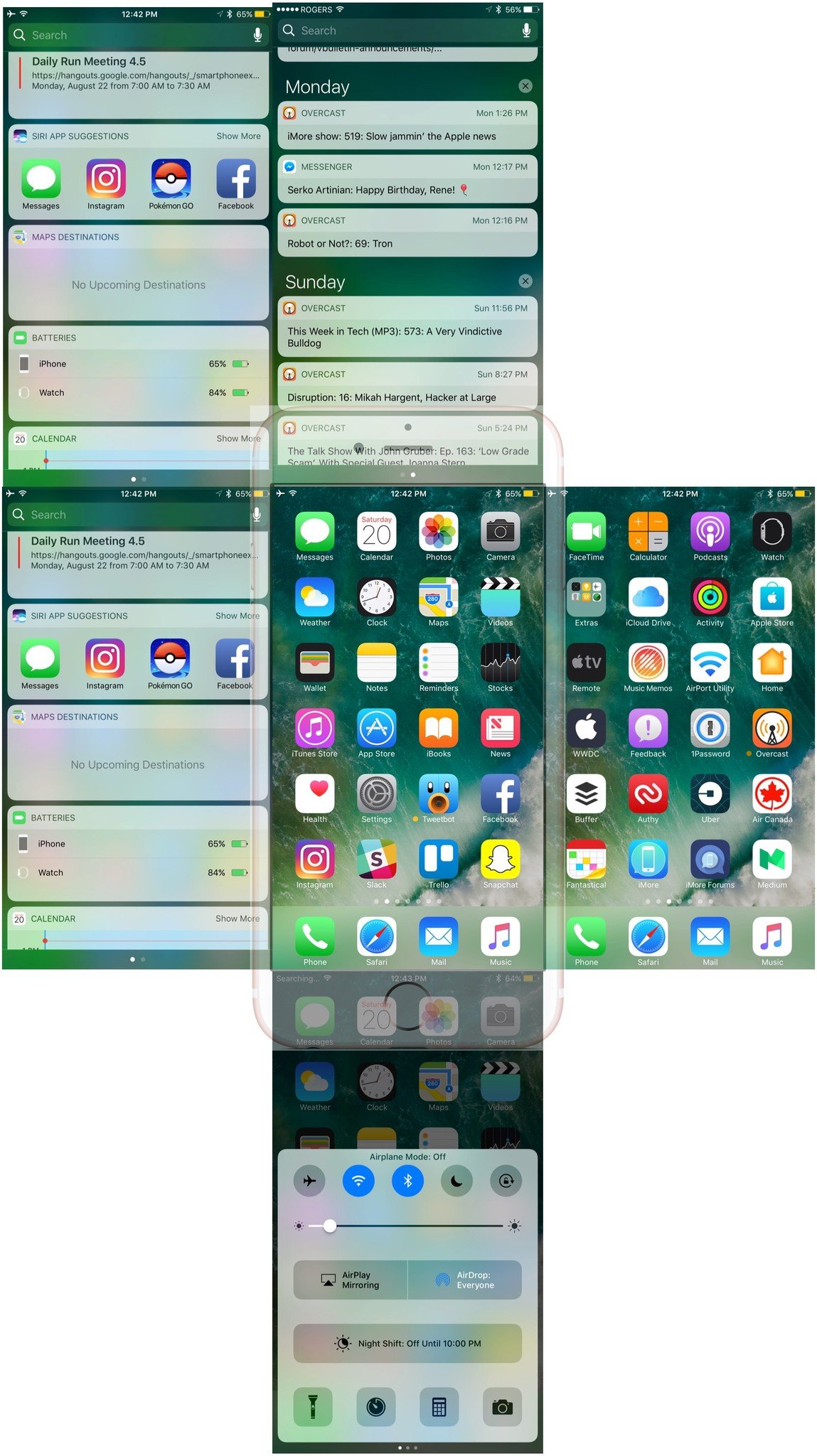
Unlike a PC or a Mac, the Home screen on iPhone and iPad is a place to store every app, shortcut, and widget you have installed. It began simply enough but has gained more and more functionality over the years, though much of it has been tucked away to reduce confusion. That way, if you don't want it, you never have to see it. If you're curious about how you can swipe one way to get to Today View widgets and another to get more apps, how you can pull down Notification Center or pull up Control Center, then here's where it all lives.
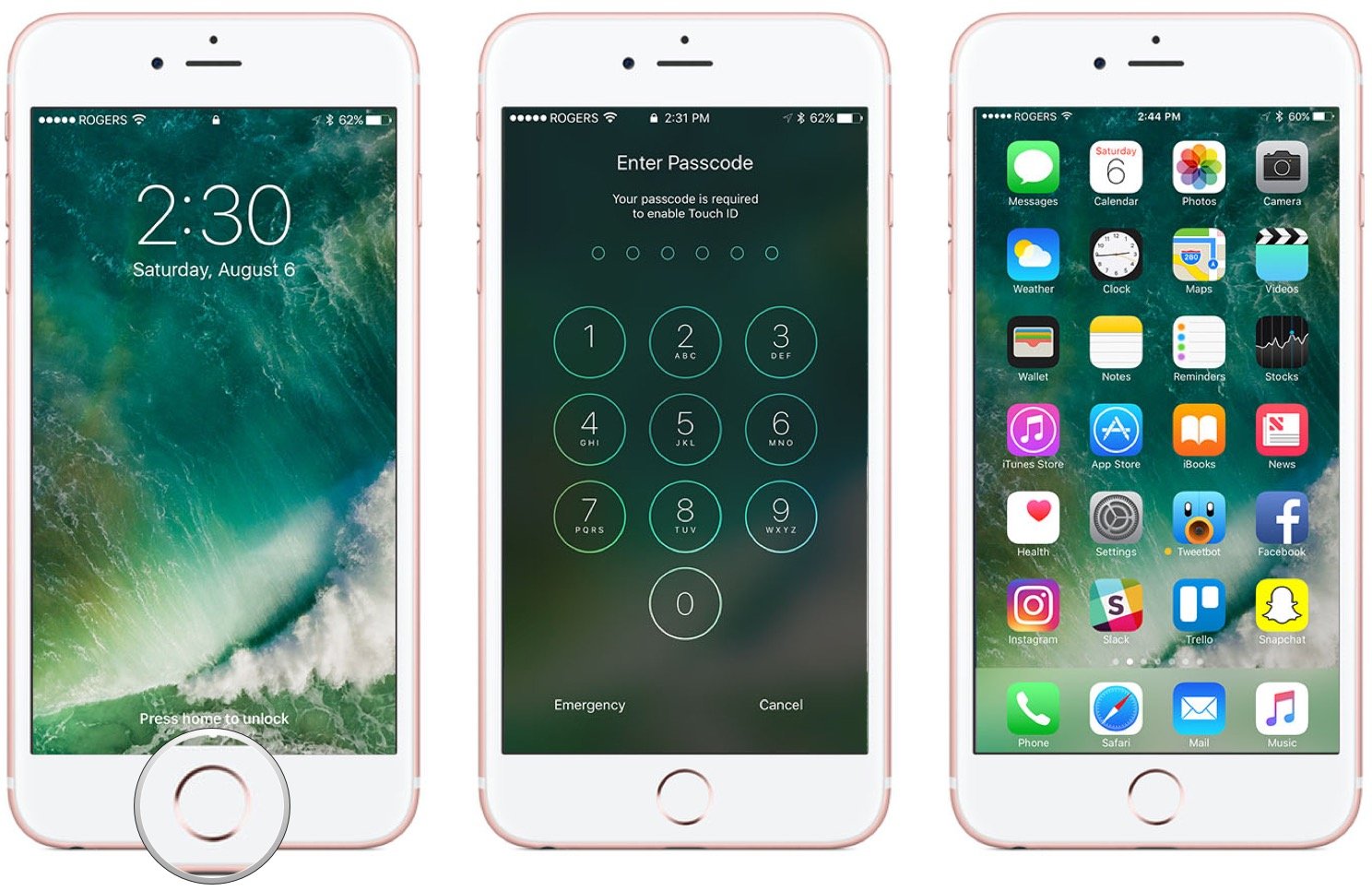
How to get to the Home screen
You get to the Home screen by pressing the Home button. You may need to unlock your iPhone or iPad first or press the Home button twice instead of once if you're in Control Center, Notification Center, or some other state. The principle is always the same, though: Home takes you Home, from anywhere, at any time.
Enter the 4-digit, 6-digit, or alphanumeric password.
If your iPhone or iPad is locked with Touch ID, Apple's fingerprint identity sensor:
Place your Touch ID-registered finger on the Home Button.
Click the Home button.
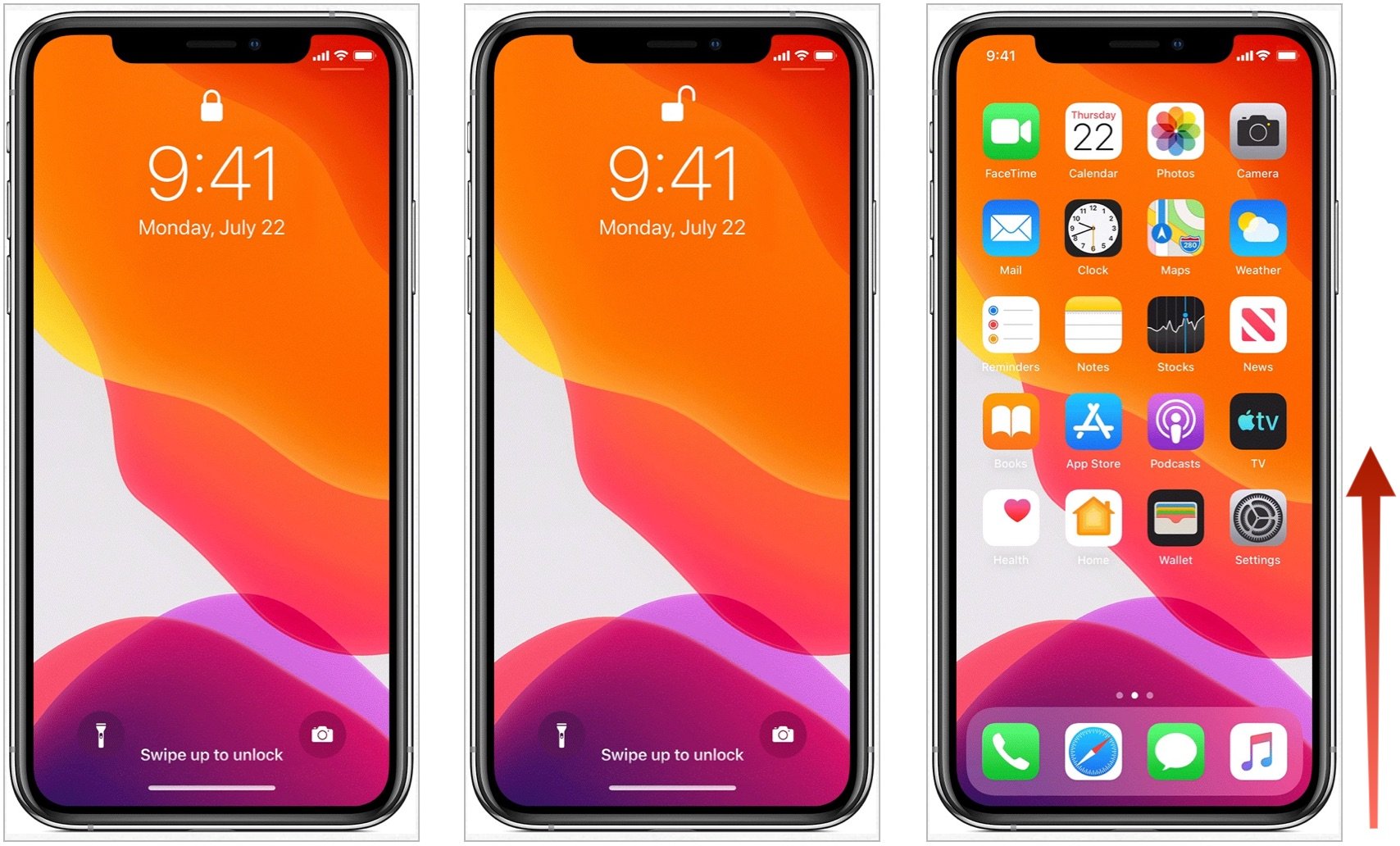
If your device is locked with Face ID, Apple's biometric identity sensor:
Raise to wake or tap to wake your iPhone or iPad.
On iPhone, glance at the screen in portrait mode. On iPad, glance at the screen in either portrait or landscape mode. Make sure your finger isn't covering the TrueDepth camera.
Swipe up from the bottom of the screen to unlock.
How to switch Home screens
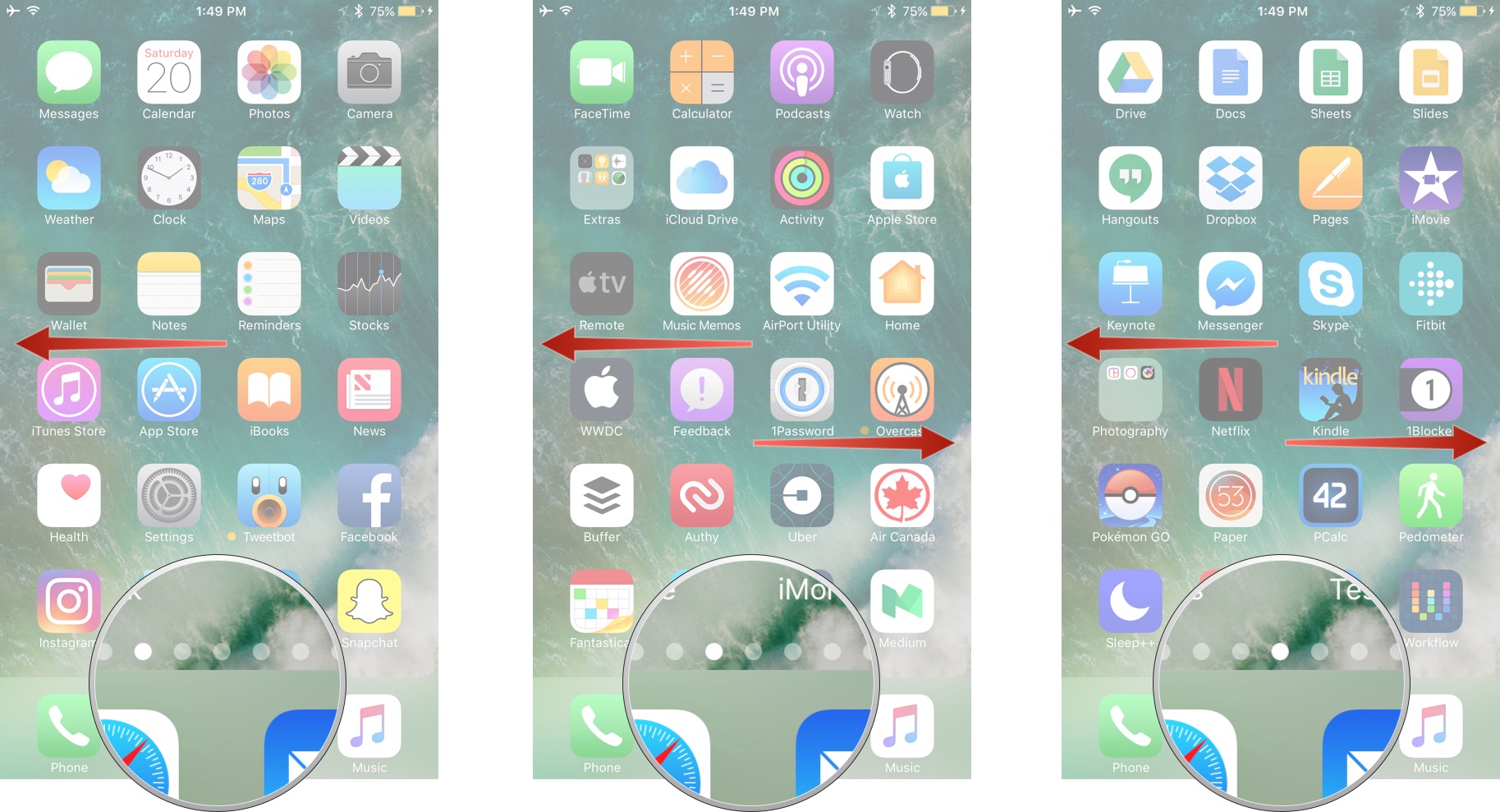
Your iPhone or iPad can have more than one Home screen. That way, you can have more apps than would fit on one page. The number of dots to the right of the main Home screen shows you how many additional Home screens you have. To switch between them:
Swipe your finger from right to left to go to the next Home page.
Swipe your finger from left to right to go back to the previous Home page.
Click the Home button to go to the main (first) Home page. Or swipe up on Face ID-based devices.
How to launch apps from the Home screen
Launching an app from the Home screen couldn't be easier:
Tap the app's icon on the Home screen.
How to see quick actions with 3D Touch or Haptic Touch on the Home screen
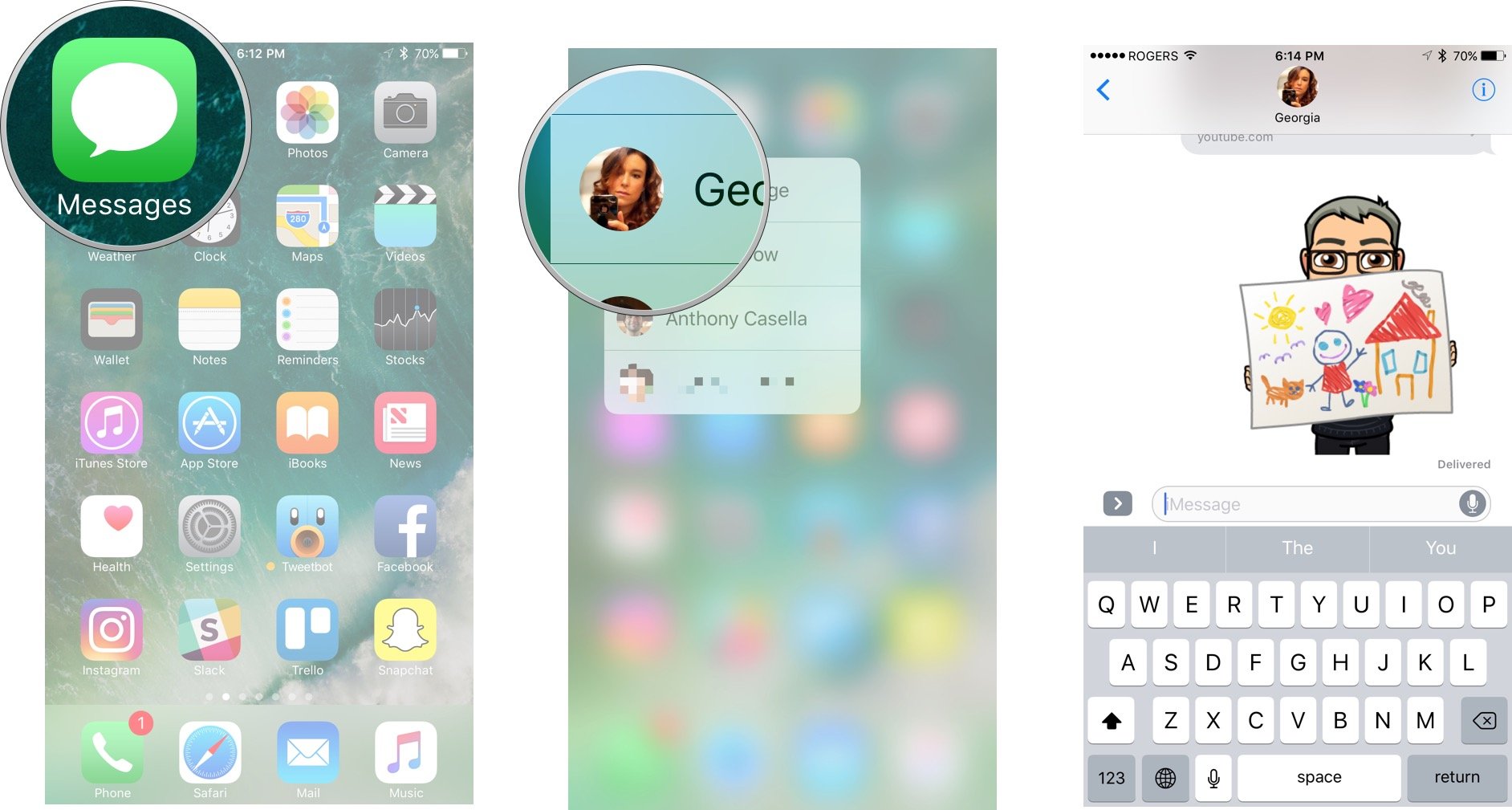
On the iPhone 6s or later, you can press firmly on an app icon to bring up quick actions. Doing this involves either 3D Touch or Haptic Touch. The former uses capacitive sensors integrated into the smartphone's display to sense three degrees of pressure in a user's touch and responds differently based on the amount of pressure exerted. The latter doesn't detect pressure. Instead, it registers how long you leave your finger on the UI element. When pressed for long enough on an app icon, you'll see the list of quick actions.
Whether you're using 3D Touch or Haptic Touch, these actions act as shortcuts for the app. Some apps have several quick actions, including dynamic quick actions that update based on the last person you contacted, article you read, show you watched, etc. Tap on an action to go directly to that feature or content in the app.
Press firmly on the Home screen icon you want to open quick actions for.
Tap on the action you want to perform.
How to quickly switch to open apps from the Home screen
Launching an app, going back to the Home screen, launching another app, going back to the Home screen, re-launching the first app … it can be tiresome. That's why your iPhone and iPad offer a faster way to jump between recently used apps.
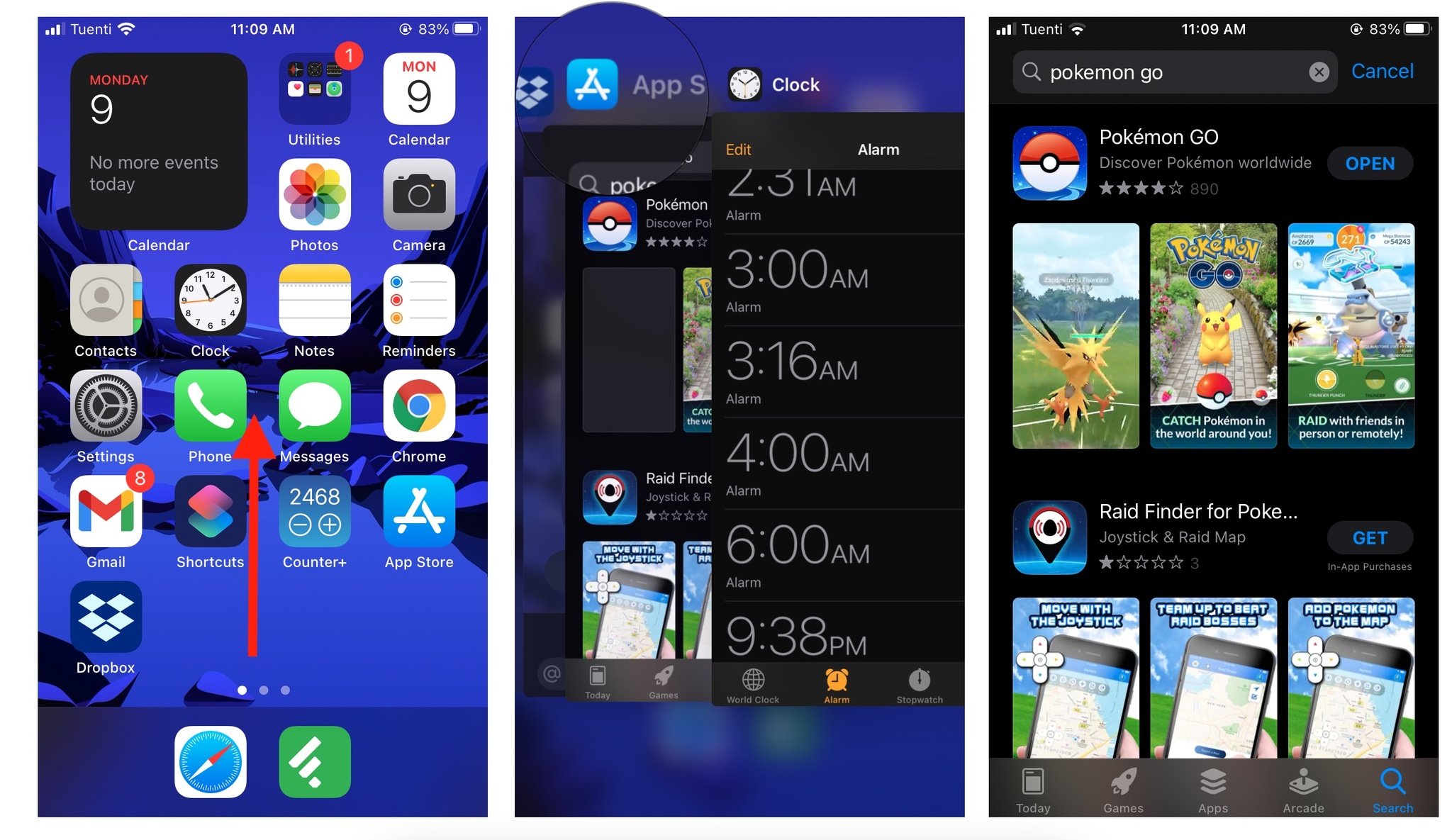
Double click the Home button or, in the case of Face ID-compatible devices, slowly slide your finger from the bottom of the device.
Swipe to the app you want to switch to. (They're in order of how recently you used them.)
Tap the app screen to switch to it.
How to access Spotlight search
Apple's built-in search system, Spotlight, can be used to quickly find information in any app that supports it. That includes not only the apps that came with your iPhone or iPad but many apps that you download from the App Store as well. With it, you can find things like contacts, emails, songs, and much, much, more.
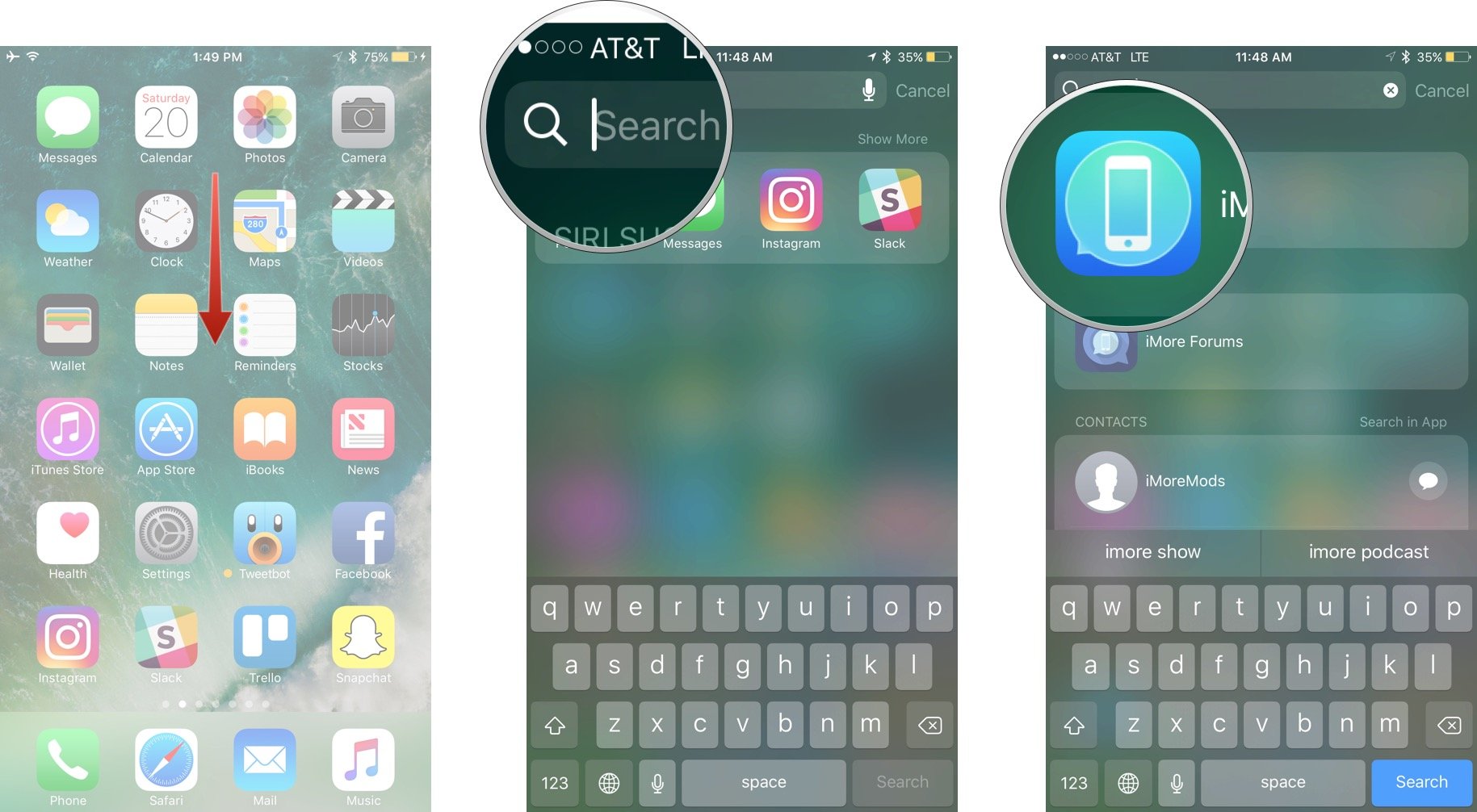
How to access Spotlight search on devices with Touch ID
Touch your finger to the Home screen (in between apps works best).
Swipe your finger down to pull down the Spotlight search field.
Type in what you're looking for.
Tap the result you want.
How to access Spotlight search on devices with Face ID
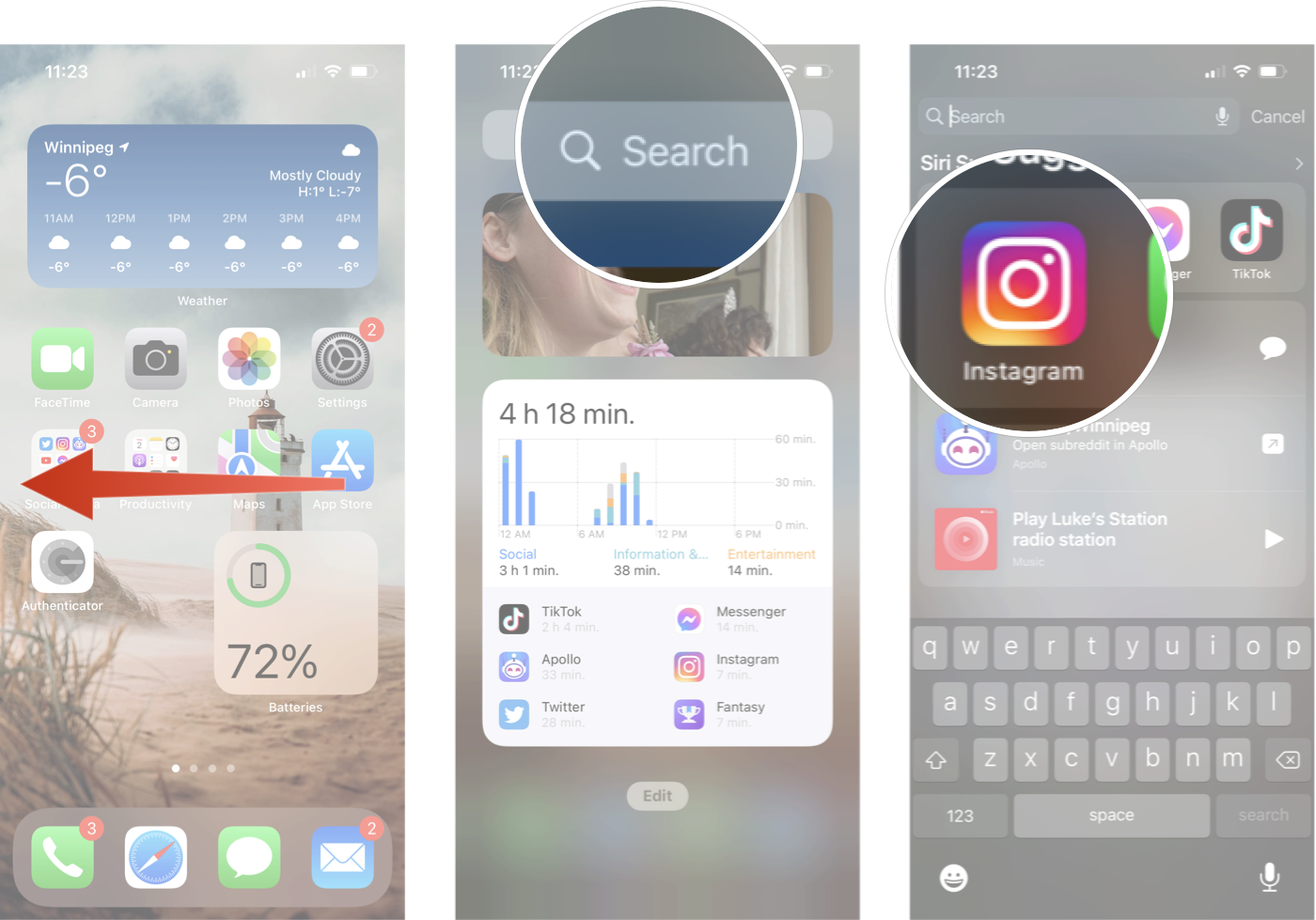
Swipe right on your Home screen to get to the widget screen.
Tap Search at the top.
Enter your search term.
Tap the result you want.
How to quickly access the Today View widgets from the Home screen
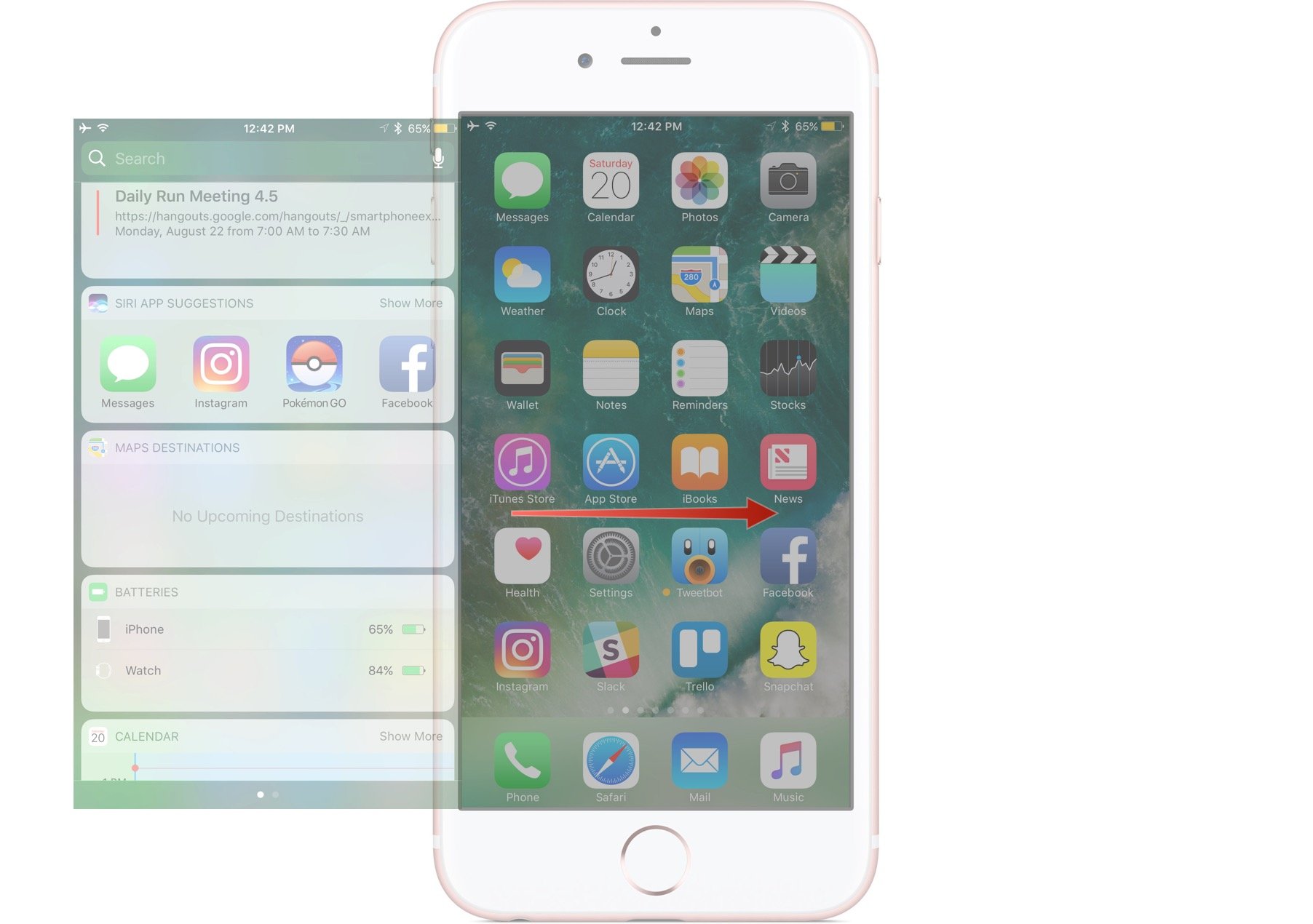
Today View widgets are combined with Siri recommendations, and you can access them in the same way from everywhere, including the Home screen.
Go to your main (first) Home screen.
Swipe your finger towards the right edge. (i.e., swipe right.)
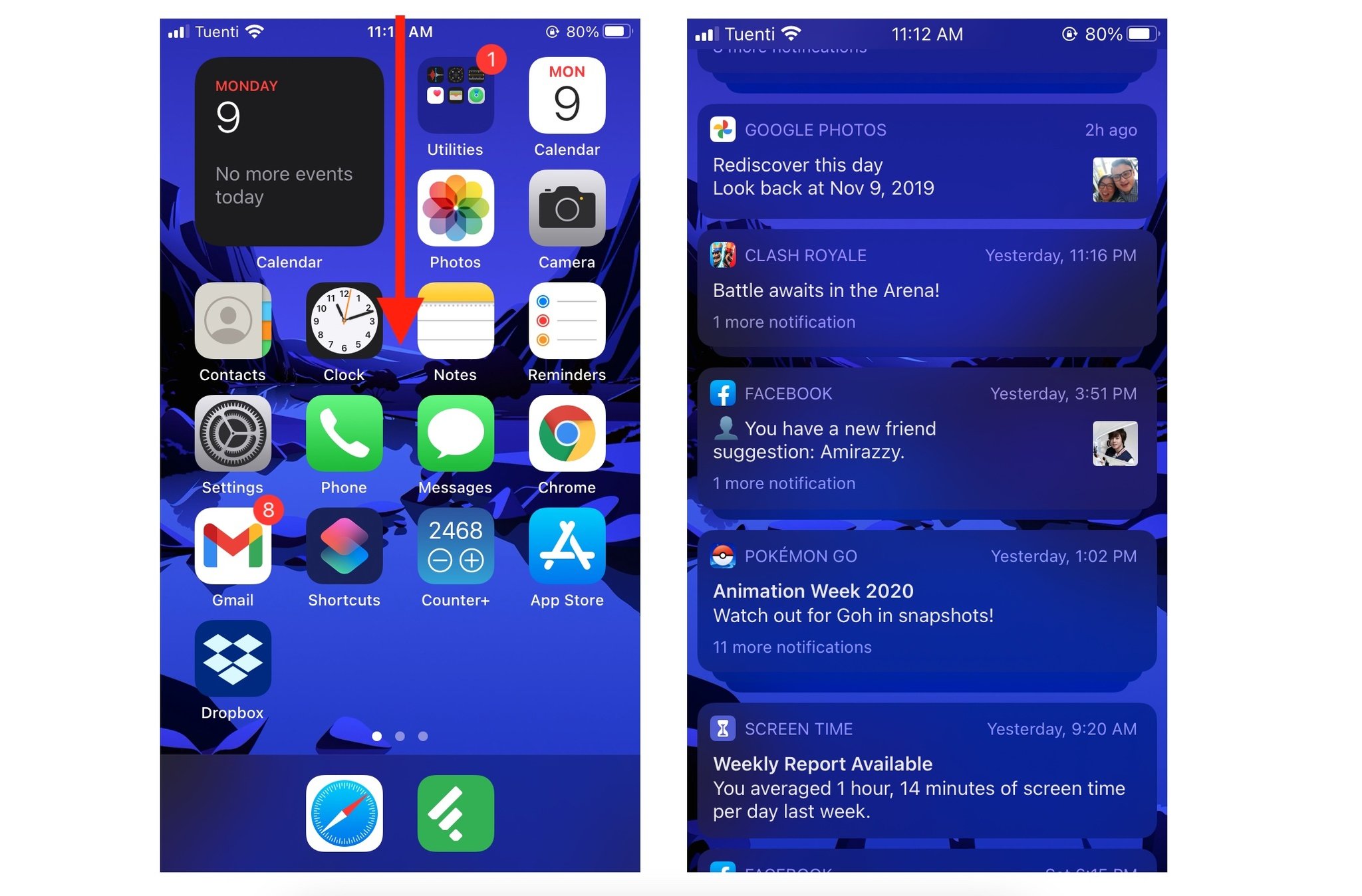
How to quickly access Notification Center from the Home screen
Touch the bezel above the screen.
Swipe your finger down onto the screen. (i.e., swipe down.)
Once you've swiped down, you can also swipe right to go to the Camera app, or swipe left to go to the Today view without having to dismiss Notification Center first. Time saver!
How to quickly access Control Center from the Home screen
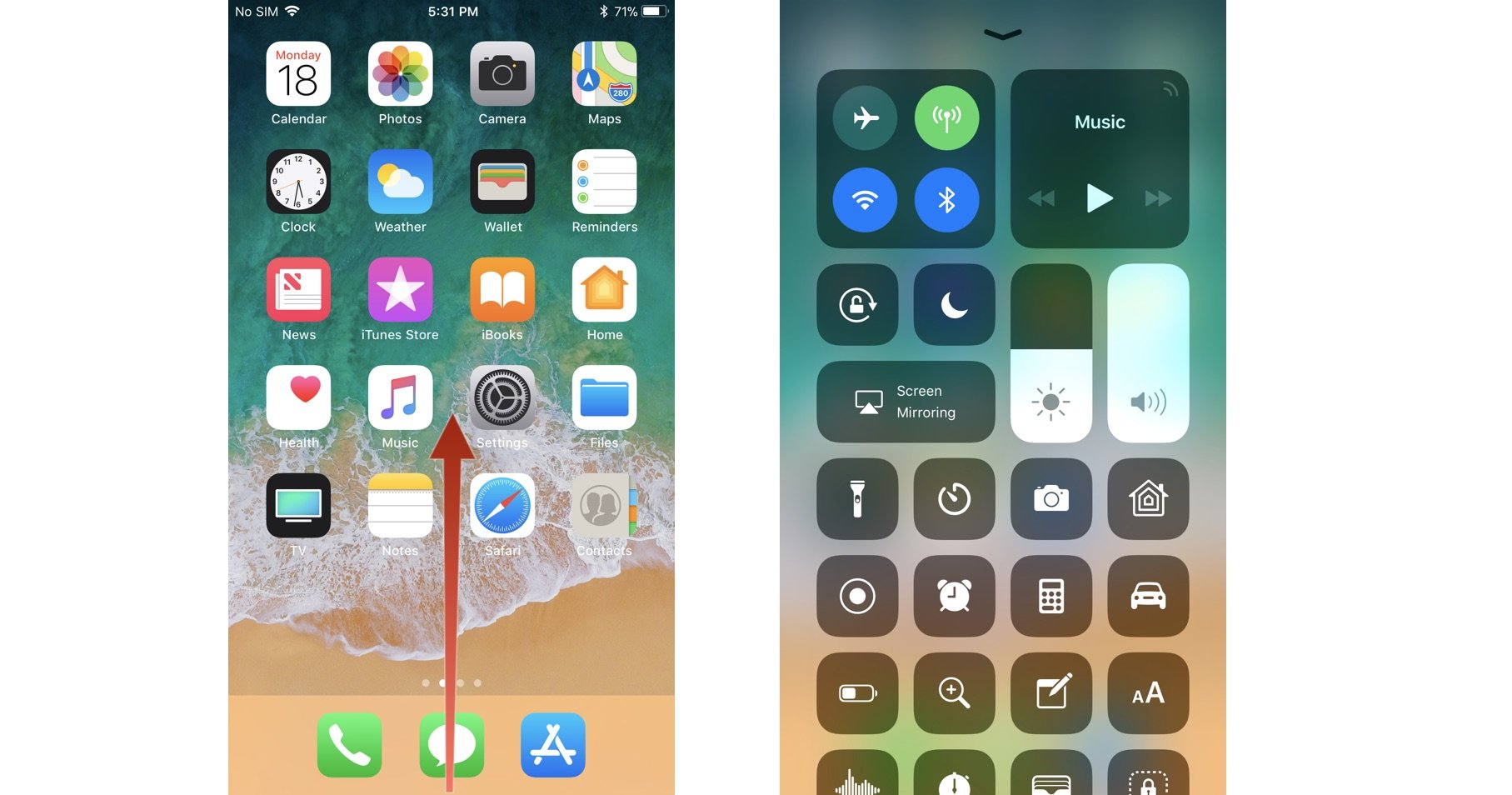
You can access Control Center from any screen on your iPhone and iPad, including while you're in an app or playing a game. All you have to do is swipe up on iPhone 8 and older and swipe down from the right corner on iPhone X and newer!
On a Phone with Touch ID
Touch the very bottom edge of the screen.
Swipe your finger up to toward the top of the screen.
On and iPhone with FaceID and newer:
Touch the top right edge of the screen where the battery, cellular, and wi-fi icons are.
Swipe your finger down toward the bottom of the screen.
How to quickly access Siri from the Home screen
You can use your voice to activate Siri, even from a distance. (Note: Voice activation doesn't work in Low Power Mode.)
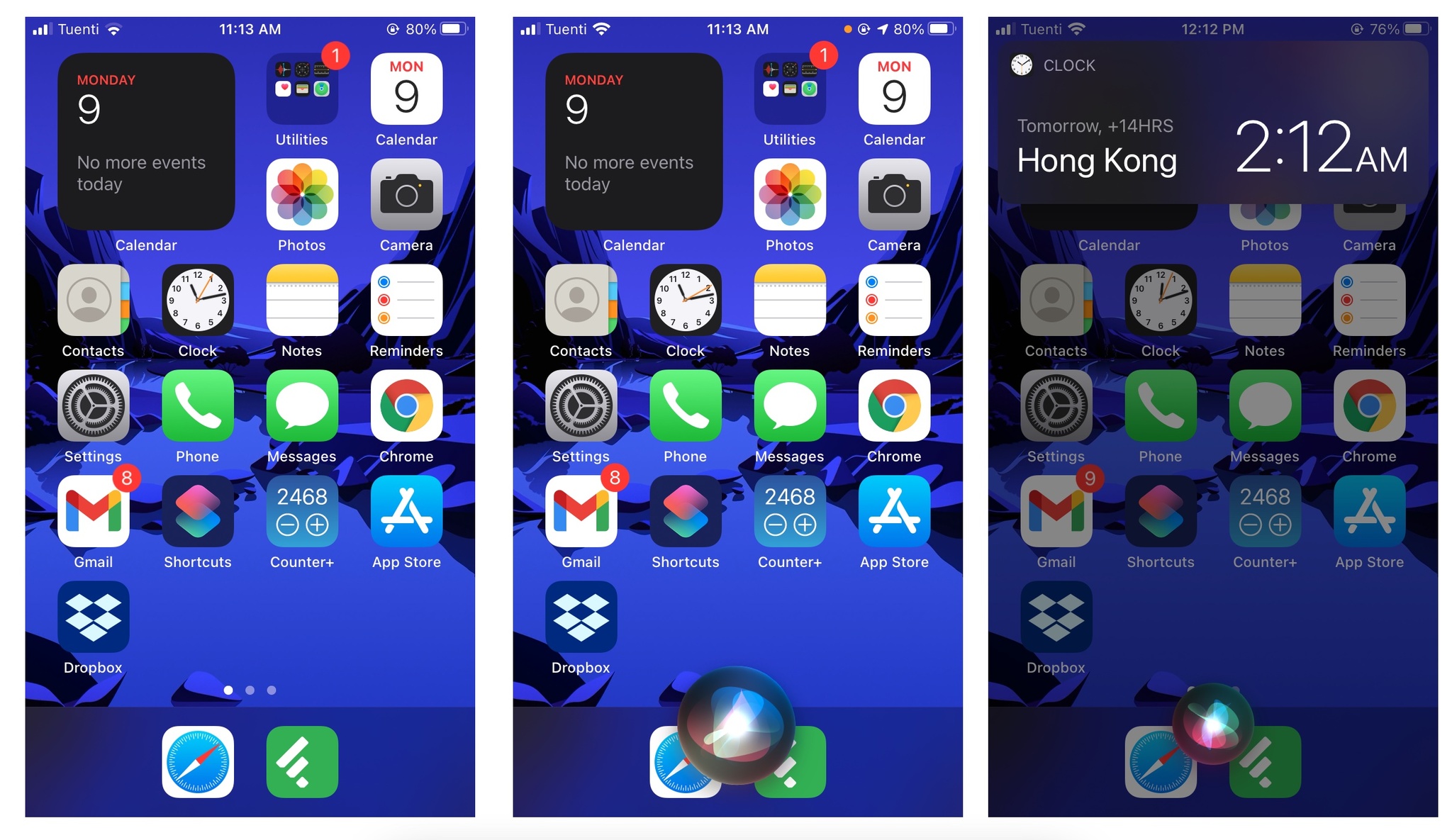
Say, "Hey Siri!"
Tell Siri what you want to know or do. (e.g., "What time is it in Hong Kong?" or "Did the Red Sox win?! ")
How to quickly access Continuity apps from the Home screen
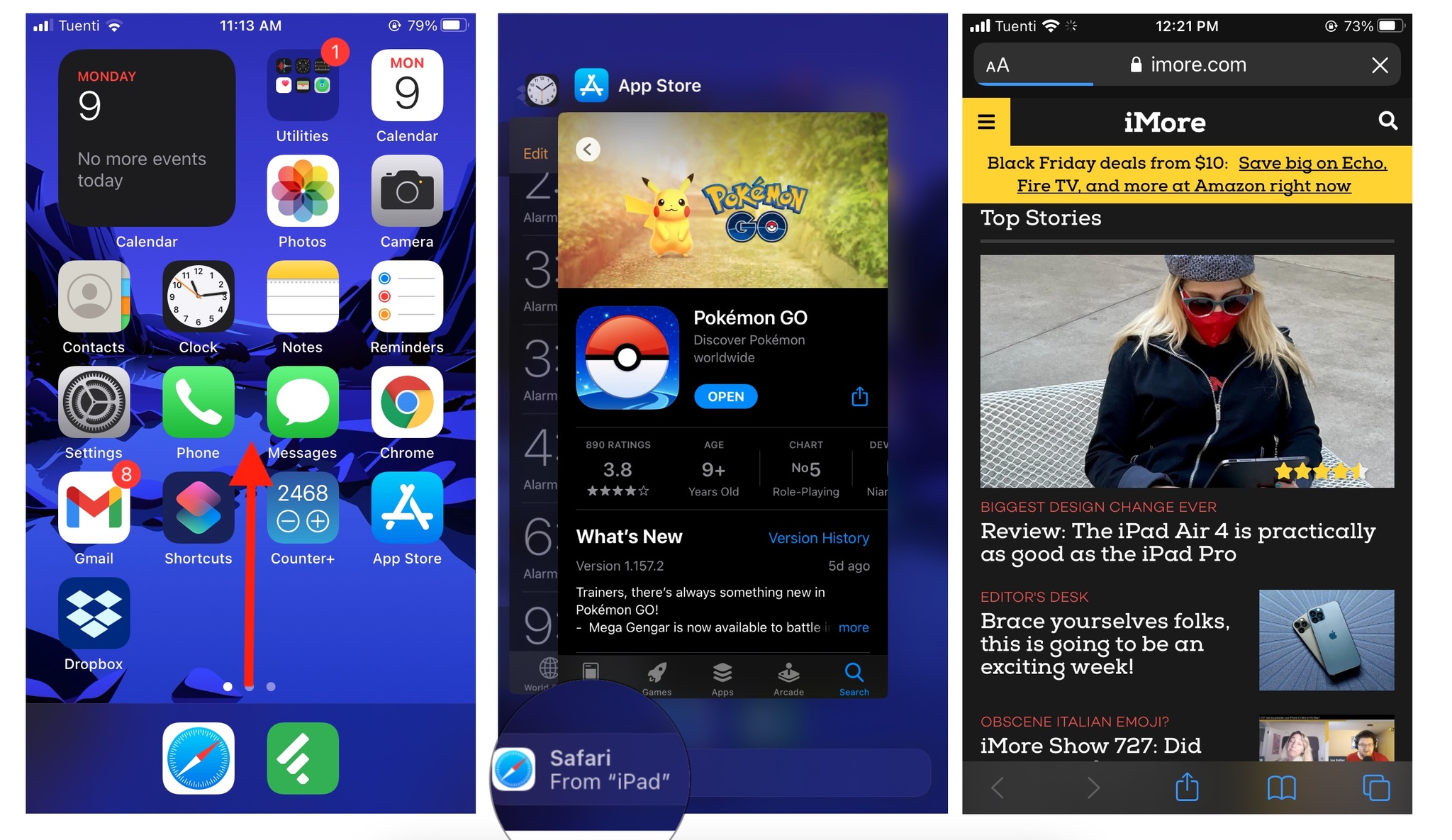
Apple lets you "hand-off" the activity you're doing on one device so you can continue it on another. For example, if you're using Safari on your Mac, you can pick up your iPhone and iPad and continue browsing right where you left off.
Double click the Home button or, in the case of Face ID-compatible devices, slowly slide your finger from the bottom of the device.
Tap the app icon at the bottom left of the screen. (If there's no app icon there, it means there's currently no suggested app and no handoff app available.)
How to lock your iPhone or iPad
By default, your iPhone or iPad will automatically turn off the screen to save power. You can, however, turn off the screen manually and go into standby mode at any time. If you have a passcode or Touch ID set up, the screen will also lock once you turn it off.
Click the On/Off button on the right side (iPhone 6 or later) or top (all other iPhones, iPods, and iPads).
When you wake your iPhone or iPad back up again, you'll return to the Lock screen.
How to turn off your iPhone or iPad
If you're not going to be using your iPhone or iPad for a while, you can turn it off to save even more power.
Press and hold down the On/Off button on the right side (iPhone 6 or later) or top (all other iPhones, iPods, and iPads) of your device for 3 seconds.
Swipe the slide to power off confirmation slider to the right.
iPad multitasking
What Apple calls "iPad Multitasking" really refers to several different things. The first is multitouch navigation that lets you use four-finger gestures for fast app switching. The second is multi-window multitasking, which lets you use two apps side-by-side in slide over or split-view mode, and optionally watch a video as well in picture-in-picture mode.
Don't forget about Widgets!
Now that you know how to navigate the Home screen on your iPhone, there's a whole world of possibilities for customization. In iOS 15, you can use Widgets to have access to all sorts of information on your Home screen.
Updated December 2021: Updated for iOS 15 and iPadOS 15.
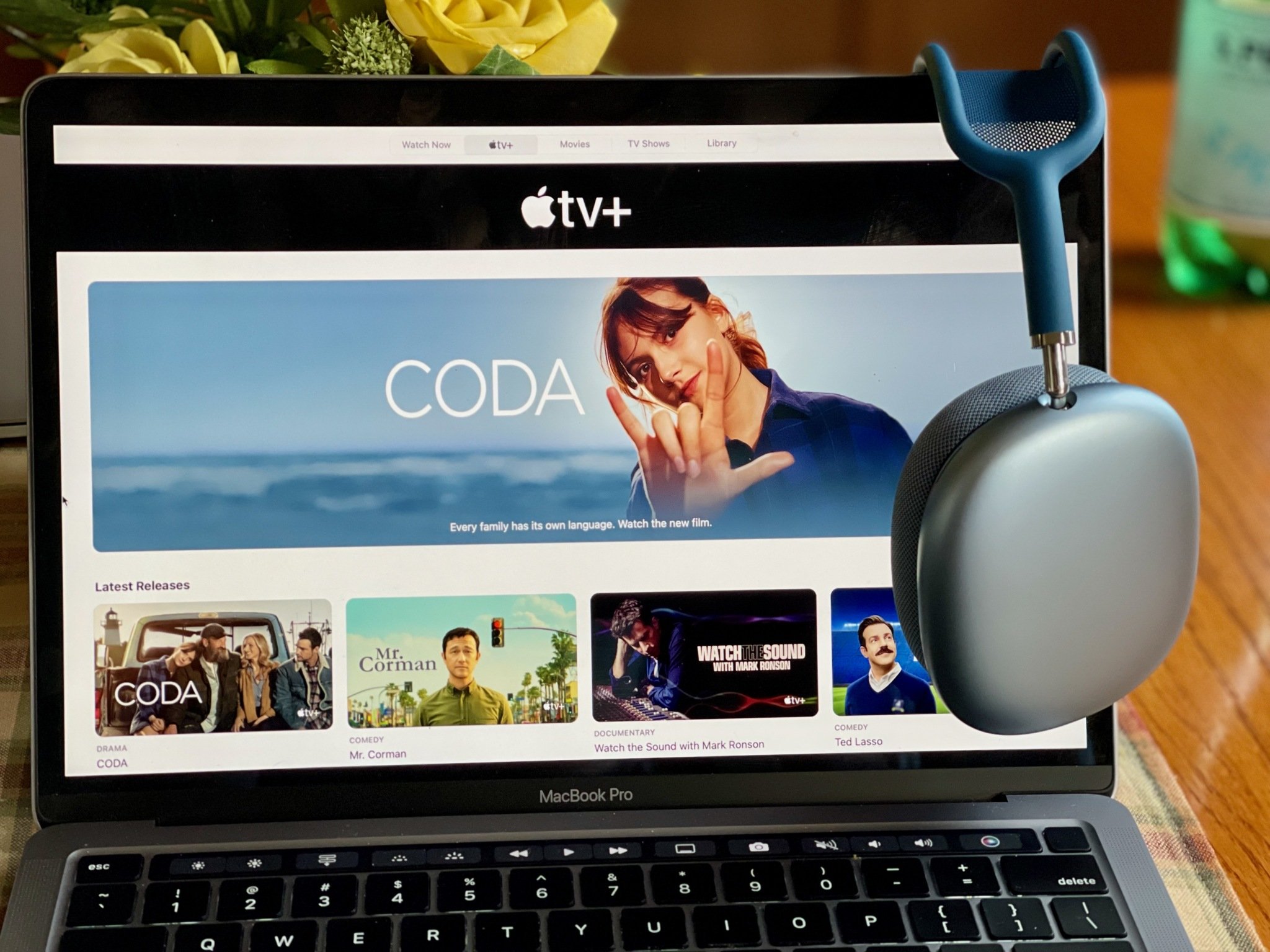
Apple TV+ has shared a new video showing off the content it has to offer this Christmas.
Shows like The Morning Show and Ted Lasso feature heavily.
Settle down to watch some heartwarming Ted Lasso this holiday season.
Streaming service Apple TV+ has shared a new video highlighting some of the content it thinks we could be watching this holiday season.
In a video posted to both YouTube and Twitter, Apple TV+ shared clips of hit shows like The Morning Show, Ted Lasso, and Foundation to the background music of Let The Music Play (Confidential MX Remix) by Barry White.
The most wonderful hits and stars of the year are on Apple TV+ Stream the latest dramas, comedies, specials, and let the happiness play on
The most wonderful hits and stars of the year are on Apple TV+
Apple TV+ clearly knows that many of us are going to be sitting around the TV with family and loved ones this holiday season and it's keen to make sure people know that it has the content to not only entertain, but also warm the heart at the same time. Ted Lasso seems like excellent Christmas viewing, although sci-fi epic Foundation is sure to be popular among viewers, too.
If you want to enjoy Apple TV+ in style, be sure to check out our list of the best Apple TV deals on the market today. In fact, you probably still have time to get your hands on a new Apple TV and much more before the family lands on your doorstep this Christmas. Go on, treat yourself! Failing that, it's never too late to write that letter to Santa.
100% exclusive content for the price of a cup of coffee.
With TV+, you can watch well-produced, big-budget TV shows from famed directors, and starring award-winning actors and actresses across all your Apple devices and with up to six members of your Family Sharing group.
Apple Music has shared a new teaser for the Apple Music Awards 2021 content starting tomorrow.
The winners have already been announced, but the celebrations kick off tomorrow.
Interviews and more will begin streaming on December 7.
Apple Music might have already announced the winners of the Apple Music Awards 2021 but there is still a ton of content to come as the streaming service celebrates those winners. Now, a new teaser has been shared to whet the appetite.
With winners including The Weeknd and Olivia Rodrigo, the upcoming content could be a must-watch when it streams on Apple Music and in the Apple TV app.
The Apple Music Awards honor achievements in music across five distinct categories, and winners are chosen through a process that reflects both Apple Music's editorial perspective and what listeners around the world are loving most. The winners for global Artist of the Year, Songwriter of the Year, and Breakthrough Artist of the Year were hand-selected by Apple Music's global editorial team of world-class experts and tastemakers, and the awards for Top Song of the Year and Top Album of the Year are based on streaming data that is reflective of what Apple Music subscribers have been listening to this year.
The awards themselves include multiple categories from around the world, with the full rundown of winners including:
Global Artist of the Year: The Weeknd
Breakthrough Artist of the Year, Album of the Year, and Song of the Year: Olivia Rodrigo
Songwriter of the Year: H.E.R.
Artist of the Year (Africa): Wizkid
Artist of the Year (France): Aya Nakamura
Artist of the Year (Germany): RIN
Artist of the Year (Japan): OFFICIAL HIGE DANDISM
Artist of the Year (Russia): Scriptonite
Apple Music is arguably the best iPhone music-listening experience around right now, although Spotify fans would likely have something to say about that.
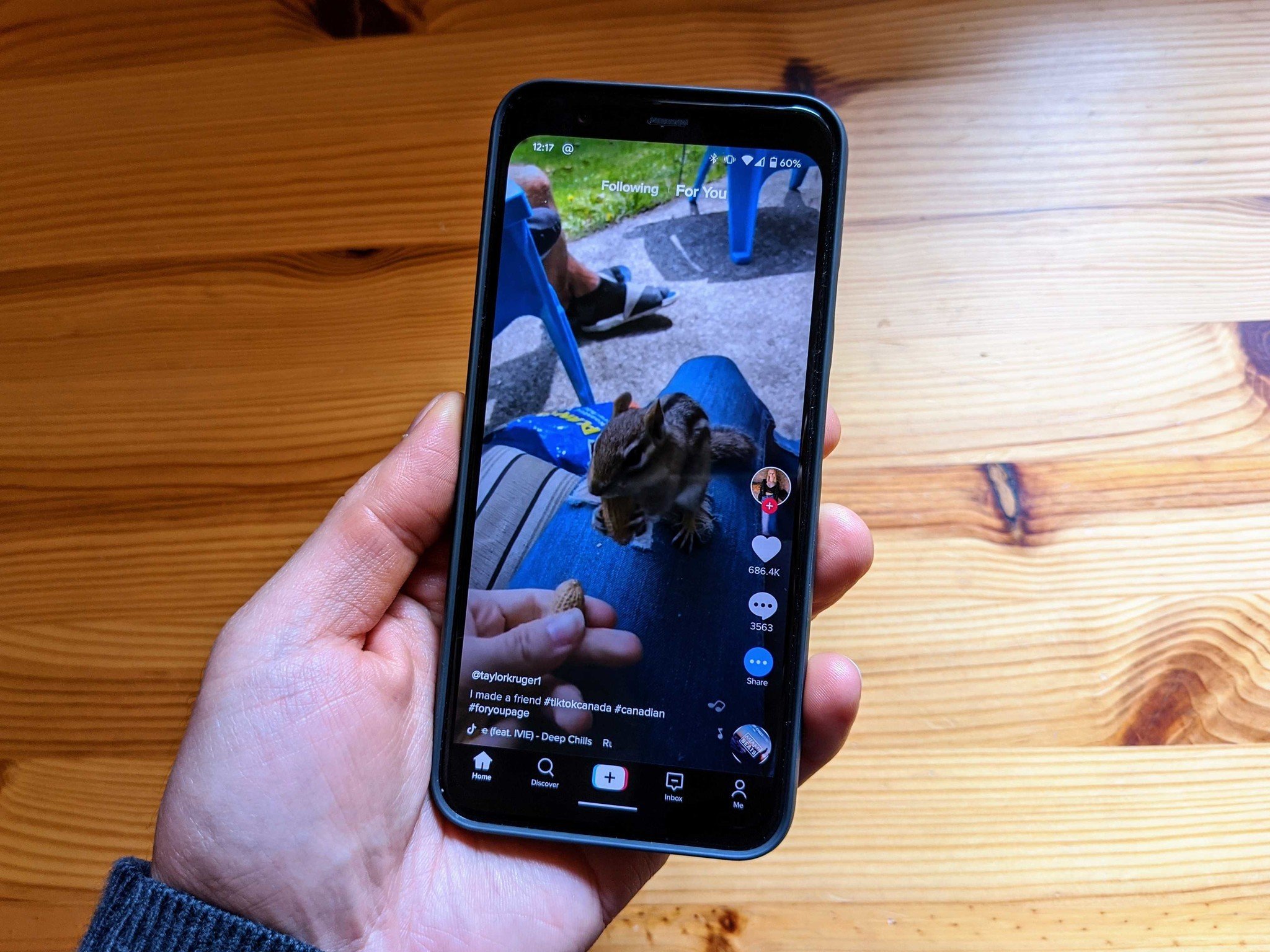
Video social network TikTok has shared a ton of data about the year that was 2021.
Stats on popular content and big winners have been shared in a Newsroom post.
Across the United States, creators inspired others to open a new book, chomp on hot chicken, and treat themselves to a "Bones Day."
2021 saw TikTok become even more popular than it already was and now the video-based social network has shared details on the big winners of the year, including which accounts grew the most.
In a lengthy Newsroom post, TikTok shared details of how its users impacted people across the United States.
This year, our global community discovered new ways to express creativity, championed the teams and the causes they care about, and found new favorites - from recipes to new music trends and genres. Across the United States, creators inspired others to open a new book, chomp on hot chicken, and treat themselves to a "Bones Day."
Stats include the most-watched videos from across the United States and around the world, with @totouchanemu - Drone Dancing coming out in the top spot on both lists. Other information included the most-used songs as well as what TikTok calls "breakthrough stars," including none other than Taylor Swift. You might have heard of her.
Taylor Swift, @taylorswift: Taylor joined TikTok in August with videos that aren't just of her cat, and reintroduced us to music we know all too well (Taylor's version).
The full Newsroom post is well worth checking out if you're interested in learning what's done well on TikTok over the last year. How many of those top videos have popped up on your For You page?
TikTok has undoubtedly become one of the world's best iPhone apps for losing time. Now we know exactly what we've been watching while doing it.
WhatsApp now supports making disappearing messages as the default for all new chats.
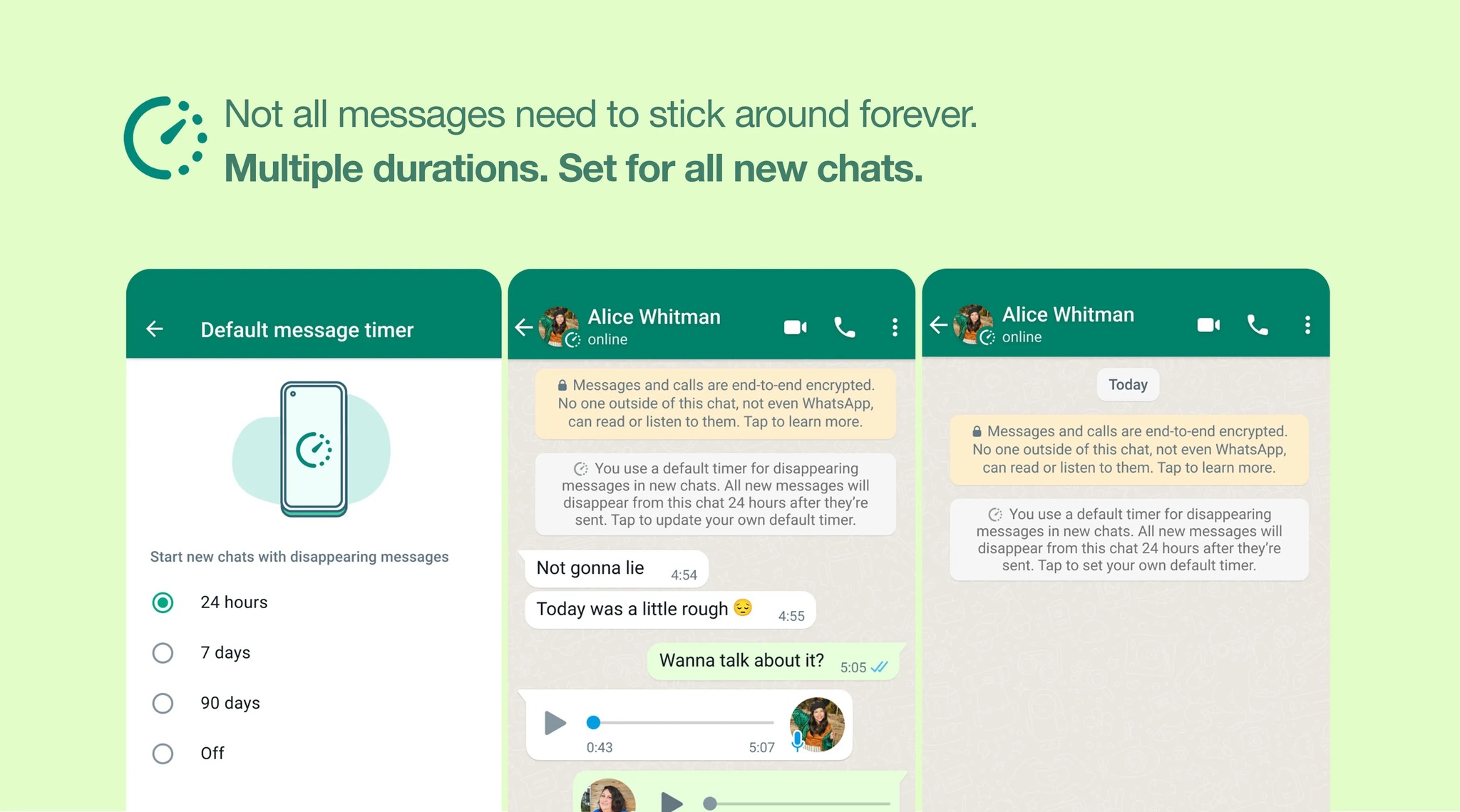
Messages can now be set to disappear after 24 hours and 90 days, along with the existing seven-day option.
24-hour and 90-day expiration times have been added as well.
Popular instant messaging service WhatsApp now supports the setting of disappearing messages as the default for all new chats, the Meta-owned company has announced.
Announced via blog post, the change means that people can now set the app to use disappearing messages on all new chats when they or another person creates them. This only applies to one-on-one chats, however — not group chats.
WhatsApp users will now have the option to turn on disappearing messages by default for all new chats. When enabled, all new one-on-one chats you or another person start will be set to disappear at your chosen duration, and we've added a new option when creating a group chat that lets you turn it on for groups you create. This new feature is optional and does not change or delete any of your existing chats.
WhatsApp has also now added two more options in terms of disappearing times. The previous option of seven days remains, while new 24-hour and 90-day options have now been added. WhatsApp also notes that people who choose to use the default disappearing messages will see an alert that tells people that's the default whenever a new chat begins.
As WhatsApp continues to prove itself as one of the best iPhone instant messaging services around, improvements like his are welcome. Those looking to enable the new feature can do so by heading into the app's privacy settings and choosing the 'Default Message Timer' option. A support document explains more.
WhatsApp is testing a change that puts waveforms in chat bubbles.
Waveforms appear in bubbles that include voice notes.
The feature is rolling out to beta testers on iOS now.
As WhatsApp continues to cement its place as one of the best iPhone instant messaging apps in the App Store, developers have enabled a change that is currently only available to beta testers. And even then, it's only available to some of them. Those people are now seeing waveforms in chat bubbles when they receive voice notes.
As reported by WABetaInfo, the change is kicking in for some beta testers, but not all. Those who have the change enabled for their accounts will now see a waveform when receiving voice notes — but only if the sender also has the feature enabled.
As you can see in this screenshot, specific beta testers can now see voice waveforms in chat bubbles, but not always: you can see voice waveforms for your voice notes if the feature is enabled for your WhatsApp account, but voice waveforms may still not show up when receiving a voice note from someone that have the feature disabled or when the voice note has been recorded using an old version of WhatsApp.
There is no indication of when we can expect this change to be made available to everyone, but WhatsApp is normally pretty good at getting things from TestFlight and into the App Store sooner rather than later. For now, we wait.
WhatsApp is undergoing changes as part of parent company Meta's attempt to keep it on Home screens not only of iPhones but of Android devices and more.